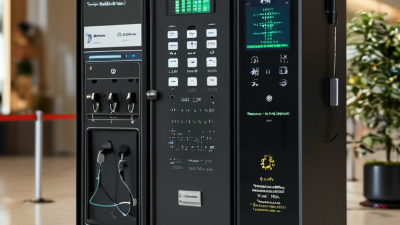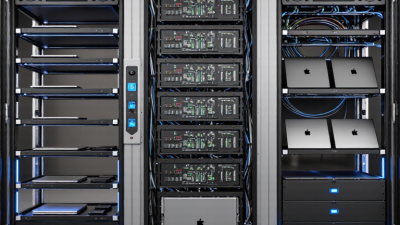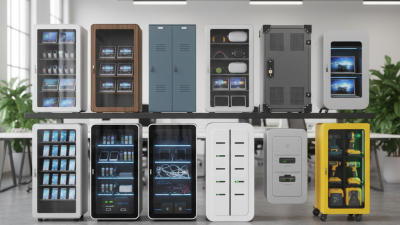
Selecting a Charging Cabinet for international use requires more than comparing prices and storage capacity. A reliable purchase begins with the devices it must protect, charge, and organize every day. A cabinet holding 16 tablets may need different airflow, cable routing, and power control than one designed for laptops. Small details matter. Buyers should examine charging speed, internal spacing, ventilation, locking design, mobility, and maintenance access before approving a supplier.
Global sourcing adds another layer of responsibility. Plug types, voltage requirements, product markings, shipping dimensions, warranty terms, and service coverage can vary between markets. Ask for clear technical drawings, test reports, user manuals, and sample photographs. Confirm whether the cabinet supports USB-C, mixed devices, or only one connector type. That is risky. A low quoted price may exclude freight, replacement parts, software configuration, or installation guidance. Request a complete landed-cost estimate instead.
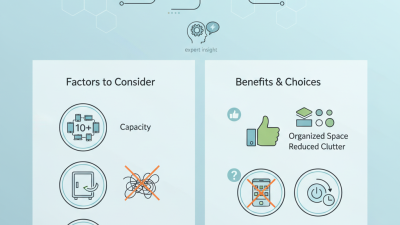
The seven buying tips in this guide focus on practical decisions that affect safety, usability, and long-term value. They reflect common procurement concerns from schools, offices, healthcare facilities, and shared workspaces. Still, no checklist is perfect. Local electrical requirements and daily operating habits deserve separate review. Test it. Before placing a large order, evaluate one sample under realistic conditions: load the cabinet, inspect heat levels, open the doors repeatedly, and verify charging performance. A careful review can prevent expensive surprises across multiple countries.
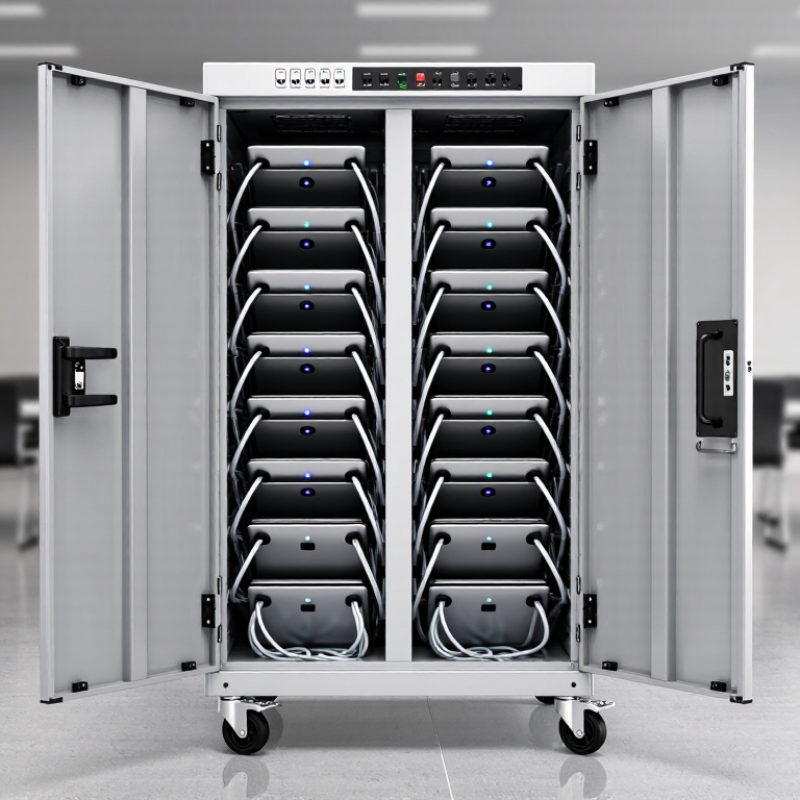
When comparing charging cabinets, start with usable energy, not the number of ports. A cabinet with 24 slots may hold 24 batteries, but their sizes can vary widely. If each battery stores 1.2 kWh, the total stored energy is 28.8 kWh. Confirm whether the supplier quotes usable capacity or theoretical capacity.
Charging rate changes the required power. At 0.5C, a 1.2 kWh battery needs about 0.6 kW. At 1C, it needs about 1.2 kW. If all 24 ports charge simultaneously, the cabinet may require 14.4 kW at 0.5C or 28.8 kW at 1C. Add conversion losses and practical headroom, often 15% to 20%. Check the site supply before approving the purchase. A small electrical panel can become the real limitation.
Port count still matters for workflow. A lower-power cabinet may serve more users during a long operating window. A high-power model may finish charging sooner, but it can increase heat, noise, and installation costs. Ask for measured performance at your battery temperature and voltage range. In field checks, advertised charging rates sometimes assume ideal conditions. That detail is easy to miss. I would also question whether every battery supports 1C charging; some do not. Use the slower verified rate for planning, then test one loaded cabinet before placing a larger order.
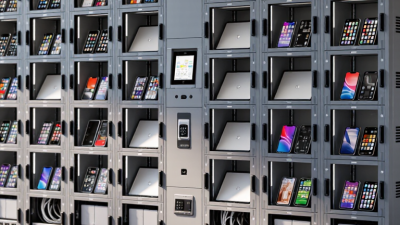
For global buyers, thermal design should match real operation between 10°C and 35°C. This range sounds moderate, but cabinet interiors can run hotter during simultaneous charging. Check heat output, airflow paths, fan capacity, and battery spacing. A cabinet placed against a wall may lose effective ventilation. That detail matters.
Ask the supplier for measured temperature data, not only calculated values. Test results should show cabinet temperature, cell temperature, charging current, and ambient conditions. Sensors should detect abnormal heat near battery modules and charging equipment. Automatic current reduction can protect batteries when temperatures rise. It also reduces charging speed. That trade-off should be clearly documented.
IEC 62619 is an important reference for industrial lithium battery safety. However, compliance for a battery system does not automatically prove that the complete charging cabinet is safe. Request the exact test scope, applicable battery configuration, protection settings, and supporting reports. Check whether alarms, isolation, overcharge protection, and fault handling match the finished cabinet. A local electrical professional should review installation conditions and regional requirements.
One practical weakness appears often: buyers compare capacity, but ignore maintenance access. Filters clog. Fans age. Cable spaces become crowded. These issues can change thermal performance after installation. Include service clearance, replacement intervals, alarm records, and spare-part availability in the purchase specification. The safest design may charge more slowly, and that may be acceptable. Speed is not the only measure of value.
7 Charging Cabinet Buying Tips for Global Buyers
A charging cabinet should not be judged by appearance alone. Ask for UL 9540A thermal-runaway test evidence before discussing price or delivery. This test method examines whether a battery fire propagates between cells, modules, units, or the full system. The report should identify the tested battery type, state of charge, cabinet layout, ventilation, and temperature readings.
Details matter greatly. A report for one cabinet configuration may not support another. Check the test sample’s dimensions, materials, door design, charging load, and fire-protection equipment. Request laboratory credentials, test dates, photographs, raw observations, and the final report number. A certificate alone is not enough.
NFPA 855 can guide installation, separation, detection, ventilation, and emergency planning. However, local authorities may interpret requirements differently. Confirm how the evidence applies to your destination, building type, and battery chemistry. Experienced buyers also ask whether the cabinet was tested under realistic loading, not an unusually empty condition. That is often overlooked. I have seen procurement teams focus on certification labels while missing exhaust routing and sensor placement. A small review mistake can become a costly site change. Keep every revision, drawing, and test record linked to the purchased cabinet. If the supplier cannot explain a test limitation clearly, pause the order and request technical clarification.
Global charging deployment is accelerating. The International Energy Agency’s Global EV Outlook 2024 reported nearly 14 million electric car sales in 2023, while public charging points exceeded four million worldwide. For buyers, enclosure protection is no longer a minor specification. It affects maintenance, safety, and service life.
Verify the rating under IEC 60529, not only in a product brochure. IP54 means protection against limited dust ingress and water splashes from all directions. It does not mean waterproof. The “IP54+” phrase is not a formal IEC protection grade, so request the exact rating, test conditions, and laboratory report. Check the enclosure, door seals, cable glands, ventilation openings, and display covers as one system. A weak gland can undermine a strong cabinet.
Look closely at installation evidence. Outdoor cabinets face rain, condensation, dust, and accidental hose spray. IEC 60529 does not measure corrosion resistance, impact strength, ultraviolet ageing, or thermal performance. Those risks need separate documentation. Ask whether testing used the same doors, locks, filters, and cable entries supplied for production. A paper rating can still mislead. I would also inspect a sample after repeated door opening and cleaning. That step is easy to skip, yet field seals often fail there. Consider IP55 or higher where exposure is severe, but do not treat a higher number as automatic proof of durability. DOE’s Alternative Fuels Data Center also emphasizes that charging equipment performance depends on site conditions and maintenance, not rating alone.
Global buyers should compare a charging cabinet by five-year total cost of ownership, not purchase price. The IEA Global EV Outlook 2024 reported more than four million public charging points worldwide at the end of 2023. That scale increases pressure on uptime, service capacity, and replacement planning. Calculate energy losses, installation, maintenance, software fees, payment charges, and technician travel. A spreadsheet can still lie.
Warranty language needs practical detail. Check coverage for power modules, cooling fans, connectors, and communication boards. Confirm response times, repair locations, and whether labor is included. Spare-part availability matters more than a long warranty headline.
Keep critical modules locally, especially where imports may take months. The U.S. Department of Energy’s Alternative Fuels Data Center shows how charging deployment varies by region, so service assumptions should match local conditions.
Software is an operating cost. Request clear pricing for updates, remote monitoring, user management, and open interfaces. Test whether data can be exported without expensive migration. Grid compatibility also deserves a site-level review. Verify voltage, phase balance, maximum demand, harmonics, protection settings, and load management.
IEC 61851 and ISO 15118 provide useful technical reference points, but local grid rules still control approval. I would not trust a brochure alone. A live commissioning test may reveal slower recovery, noisy cooling, or unstable communications. That small doubt is useful.