Why You Should Choose an Outdoor Power Bank for Your Adventures?
When heading into the great outdoors, staying connected is vital. An Outdoor Power Bank serves as a reliable lifeline. Imagine climbing up a mountain or trekking through a forest. Your phone can run out of battery when you need it most. That’s frustrating.
An Outdoor Power Bank ensures your devices stay charged. It’s not just about convenience; it’s about safety. You can navigate trails, call for help, or capture moments with your camera. Options vary, from lightweight models to those with solar panels.
However, choosing the right one is crucial. Not all Outdoor Power Banks are weather-resistant or rugged enough for tough conditions. Think about your adventures and what features matter most to you. Embrace the challenges, but do so wisely with the right gear in hand.
Benefits of Using Outdoor Power Banks for Adventures
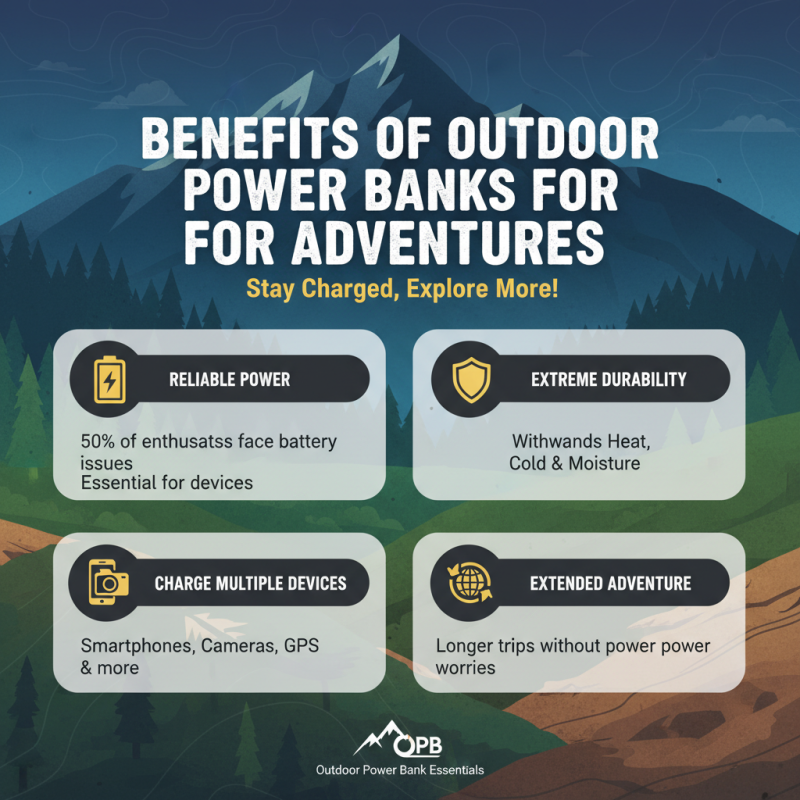
Outdoor adventures can be exhilarating yet demanding. A reliable power source is essential. Outdoor power banks offer various benefits that enhance your experience. According to industry reports, nearly 50% of outdoor enthusiasts face battery issues during trips. These power banks are designed to endure extremes. They withstand heat, cold, and moisture, ensuring your devices stay charged regardless of conditions.
Consider the portability of these power banks. Many models are lightweight and compact, making them easy to carry. Some attach to backpacks, freeing up space. This can be crucial when hiking long trails. A study from the Outdoor Foundation reveals that 70% of outdoor activities span more than two hours. A drained phone can mean losing essential navigation or safety tools. Having a direct charging option becomes a lifeline in remote areas.
It's also worth noting that not all outdoor power banks are created equal. Many boast high-capacity batteries. Some can charge multiple devices simultaneously. However, it’s easy to overlook their compatibility with non-standard devices. Miscalculations here can leave you disconnected. The adventure should be about exploring, not dealing with dead batteries. Judging by statistics, around 30% of adventurers regret not choosing quality power solutions. Prioritizing a good outdoor power bank can truly make or break your adventure.
Key Features to Look for in an Outdoor Power Bank
When exploring the outdoors, having reliable power is crucial. An outdoor power bank ensures you stay connected and safe. Look for rugged designs. IP67 ratings are ideal for water and dust resistance. Research indicates that nearly 70% of outdoor enthusiasts have experienced device failures due to weather. A durable power bank can help avoid such situations.
Next, consider battery capacity. A minimum of 10,000 mAh is recommended for multiple charges. Studies show that 40% of users prefer power banks that can fully charge devices at least twice. Lightweight options are also valuable. Many users prefer models under one pound for easier transport. Portability can make a difference in long hikes or camping trips.
Additional features are essential. Solar charging capabilities can extend your power supply. Data suggests that 25% of outdoor adventurers have benefited from solar tech in their devices. Always check compatibility with your gadgets. A versatile option will support various devices, making it more functional. Reflect on your specific needs. The right power bank can enhance your outdoor experiences significantly.
Outdoor Power Bank Features Comparison
Comparing Outdoor Power Banks with Regular Power Banks
When planning outdoor adventures, the type of power bank you choose is crucial. Outdoor power banks are built to withstand harsh conditions. They often feature higher durability, being shockproof and water-resistant. Regular power banks lack these rugged capabilities. You might find yourself stuck without power if a regular bank fails in wet conditions.
Another key difference is battery capacity. Outdoor models tend to offer larger capacity options. They can charge devices multiple times, a must during long hikes. Regular power banks may not hold enough juice for extended outings. It’s common to underestimate your energy needs. Realizing your power bank can’t keep up can be frustrating.
Portability plays a significant role as well. Most outdoor power banks are designed to be lightweight and easy to carry. They often include handy features, like built-in LED lights or solar charging options. Regular models usually lack these extras, leaving you dependent on finding an outlet.
Outdoor adventures come with unexpected challenges. Choosing the right power bank can make your experience smoother. A reliable power source lets you focus on exploring, not worrying about dead devices. Not all outdoor power banks are perfect, though; some may take too long to charge. Always consider your specific needs before purchasing.
Why You Should Choose an Outdoor Power Bank for Your Adventures? - Comparing Outdoor Power Banks with Regular Power Banks
| Feature |
Outdoor Power Bank |
Regular Power Bank |
| Durability |
Rugged and shock-resistant |
Typically fragile and more prone to damage |
| Water Resistance |
Often IP67 rated or higher |
Generally not water resistant |
| Battery Capacity |
Usually higher capacity (20,000 mAh+) |
Lower capacity (5,000 - 15,000 mAh) |
| Charging Ports |
Multiple and fast charging options |
Typically fewer ports |
| Weight |
Moderate to heavy for rugged design |
Lightweight and portable |
| Price |
Generally more expensive |
More affordable options available |
How to Properly Use an Outdoor Power Bank During Adventures
When you embark on an outdoor adventure, staying powered is crucial. An outdoor power bank can be a lifesaver. However, using it correctly is essential to maximize its benefits. Always charge your power bank fully before heading out. This can provide you with multiple charges for your devices. In a recent report, it was found that nearly 70% of outdoor enthusiasts experienced battery depletion during their activities.
Placement matters. Keep your power bank in a warm, insulated area. Cold temperatures can reduce battery efficiency significantly. The same report indicated that devices charged in cold conditions may lose power faster. Aim to use your devices wisely. Turn off background apps to save energy. An outdoor power bank typically has a limited number of recharges. Reflect on your usage patterns. Are you really using your devices, or are they just for convenience?
Pay attention to the charging cables as well. Using low-quality cables can lead to inefficiencies. It is best to invest in good cables that match your power bank’s specifications. Power banks may vary, and charging technology does improve over time. If a power bank isn’t working effectively, it might be time to reconsider your options. Remember, adventures are better enjoyed with a fully charged phone, but your planning plays a big role in that outcome.
Maintenance Tips for Extending the Life of Your Outdoor Power Bank
When embarking on your outdoor adventures, an outdoor power bank is essential. To ensure its longevity, you need to maintain it properly. Regular maintenance can prevent unexpected failures during your trips.
One important tip is to store your power bank in a cool, dry place. Extreme temperatures can damage the battery. If you notice any swelling or unusual signs, it's time to reconsider its use. Always check the charging ports for dust or debris. Clean them gently to ensure good connectivity.
Another key aspect is to keep the battery charged. Avoid letting it drain completely. A fully drained battery can reduce its lifespan. Instead, charge it up frequently. Remember to use it regularly, too. Batteries can lose capacity if they sit unused for long periods.








 WS Kate
 Weshare Power Bank