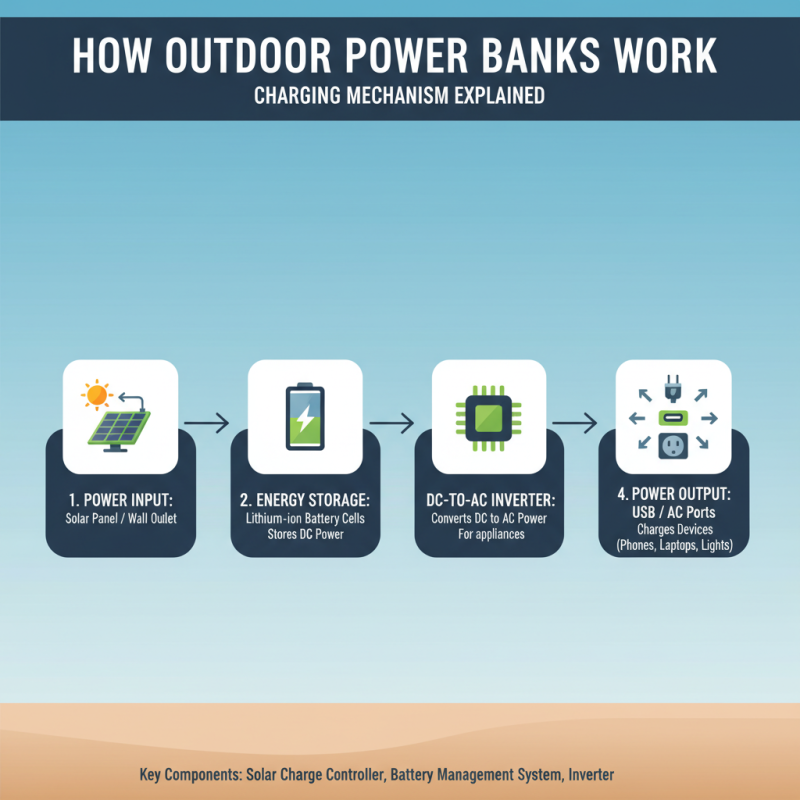
What is an Outdoor Power Bank and How Does it Work?
In today’s digital age, staying connected while enjoying the outdoors is increasingly essential. An Outdoor Power Bank provides a solution to this need. Experts emphasize its importance. As Andrew Thompson, a leading figure in outdoor technology, states, "An Outdoor Power Bank is not just a gadget; it's a lifeline for adventurers."
These devices come equipped with robust batteries designed to withstand various climates. They offer reliable power for smartphones, GPS devices, and cameras. The right power bank can be a game-changer during a weekend camping trip or a long hike. However, not all power banks are created equal. Many users find it challenging to choose the right model for their needs.
Users often overlook crucial factors such as battery capacity and charging speed. It’s easy to assume that all Outdoor Power Banks can handle extreme conditions. This misconception can lead to frustration in critical moments. The reality is that understanding how these devices work is key to making an informed decision.
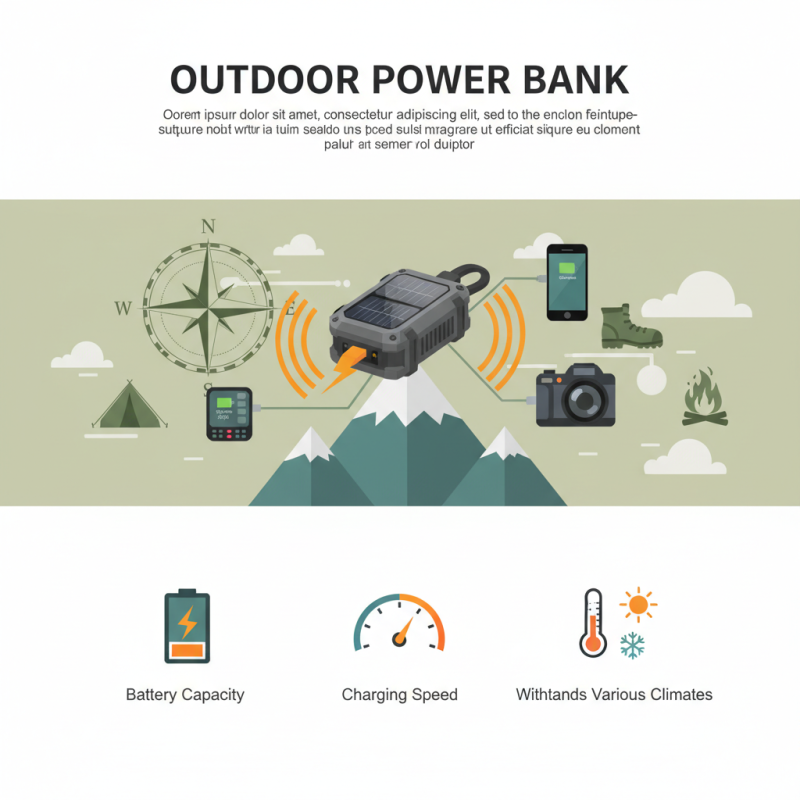
What is an Outdoor Power Bank?
An outdoor power bank is a portable device designed to charge electronic gadgets in remote locations. This type of power bank is particularly useful for camping, hiking, or outdoor events where traditional power sources are unavailable. With advancements in battery technology, many outdoor power banks now incorporate solar panels, enabling users to harness sunlight for extra charging capabilities. Reports indicate that the global portable battery market is expected to grow at a compound annual growth rate (CAGR) of around 14.4% from 2021 to 2028, highlighting the increased demand for such devices.
These power banks typically have a higher capacity compared to standard models, offering anywhere from 10,000mAh to over 50,000mAh. This capacity allows users to charge multiple devices repeatedly before needing a recharge. Many outdoor power banks feature rugged designs, providing resistance to water and impact. However, their effectiveness can sometimes be limited by environmental conditions, such as cloudy weather affecting solar charging. According to a recent study, about 45% of outdoor enthusiasts report issues with power banks not performing as expected, particularly in extreme temperatures.
User feedback often highlights the need for lightweight models. However, many high-capacity options can be quite heavy. The balance between weight and power is a common concern for users. Additionally, while some devices claim extreme durability, real-world usage shows that careful handling is often still necessary. Ultimately, understanding these aspects can help users make informed decisions about which outdoor power bank best fits their adventure needs.
Key Features of Outdoor Power Banks
Outdoor power banks are designed for adventurous souls. They are built to withstand the elements. These devices often have a rugged construction, making them resistant to impacts and water. This is essential for camping, hiking, or any outdoor activity.
One key feature is capacity. Many outdoor power banks can hold enough energy for multiple charges. Look for one with at least 20,000 mAh. Solar options are available, too. They can recharge using sunlight, but they may be slower. Don’t expect them to work perfectly in all conditions.
Another important aspect is connectivity. Several ports allow you to charge multiple devices simultaneously. USB-C and fast charging capabilities are common. However, remember that high capacity doesn't always mean quick charging. It’s a trade-off. Considering these features ensures you choose a reliable power source for your adventures.
What is an Outdoor Power Bank and How Does it Work? - Key Features of Outdoor Power Banks
| Feature |
Description |
Benefits |
| Portability |
Compact and lightweight design to easily carry while outdoors. |
Fit in backpacks and pockets for convenient travel. |
| Battery Capacity |
Ranges from 5000 mAh to 30000 mAh to accommodate different needs. |
Ensures sufficient power for multiple devices or longer trips. |
| Water Resistance |
Designed to withstand rain and splashes (IP rating). |
Protects the power bank during outdoor activities. |
| Solar Charging |
Some models include solar panels for recharge while outdoors. |
Provides an eco-friendly charging option in remote areas. |
| Multiple Outputs |
Equipped with USB ports and other connectors for charging several devices. |
Convenient for group trips to charge multiple gadgets simultaneously. |
| Fast Charging |
Supports quick charging technology to charge devices rapidly. |
Reduces waiting time for charging while on the go. |
Benefits of Using Outdoor Power Banks in Remote Areas
Outdoor power banks have become essential tools for those venturing into remote areas. These devices allow users to recharge their gadgets without access to traditional power sources. A well-designed outdoor power bank is portable, durable, and weather-resistant. This makes it ideal for camping, hiking, and other outdoor activities.
One primary benefit of using outdoor power banks is convenience. They provide a reliable power source for smartphones, cameras, and GPS devices. Picture this: you reach the summit after a long hike. Your phone is dead, and you can't capture the moment. An outdoor power bank could have prevented this frustration. Moreover, they ensure you stay connected, even in the wilderness. However, not all power banks are equal. Some may lack sufficient capacity or durability.
Another advantage is peace of mind. In remote areas, having power can be a safety issue. It allows for emergency communication if needed. But it’s worth considering that power banks can sometimes fail. Cold temperatures can affect their performance. Users must ensure they choose a suitable model for their adventures. Ultimately, while outdoor power banks are incredibly useful, it’s essential to understand their limitations.
Tips for Choosing the Right Outdoor Power Bank for Your Needs
When choosing an outdoor power bank, consider capacity.
A higher capacity means more charges for your devices. Look for options with at least 20,000 mAh.
This can ensure you keep your phone or tablet powered during long trips. Compact models are great for portability, but they may not hold enough energy.
Balance is key.
Next, check the weather resistance rating. Outdoor adventures can be unpredictable.
A water-resistant power bank offers peace of mind in wet conditions. Also, think about charging speed.
Look for multiple output ports for convenience. If you need to charge multiple devices, this feature is crucial.
Lastly, pay attention to extra features. Some models include built-in flashlights or solar charging capabilities.
While interesting, these additions can add to the weight. Always weigh the benefits against the overall design.
Finding the right power bank is about aligning your specific needs with available options.






 WS Kate
 Weshare Power Bank