
Leave Your Message
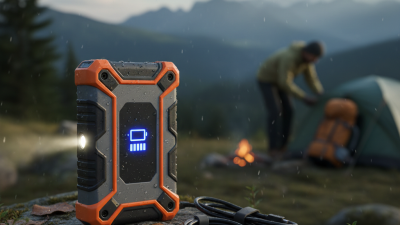
Outdoor adventures increasingly depend on compact, dependable electricity. Phones guide routes, cameras record weather, and emergency radios preserve contact. The Outdoor Power Bank has therefore become more than a convenient accessory. It is a practical safety tool.
Market data supports this shift. Grand View Research reports that the global portable power station market reached approximately USD 545 million in 2023. It also projects strong growth through 2030, driven by camping, emergency backup, and off-grid recreation. MarketsandMarkets identifies rising outdoor activities and renewable charging options as important market drivers. These figures describe portable power stations broadly, not every pocket-sized power bank. That distinction matters.
China remains a major manufacturing center for batteries, charging electronics, and consumer power products. However, factory location does not automatically guarantee quality. A reliable Outdoor Power Bank should provide clear battery capacity, stable USB output, thermal protection, and realistic charging times. Buyers should also check transport testing under UN 38.3 and battery safety expectations under IEC 62133-2, where applicable. USB-IF compliance can further support trustworthy USB-C performance.
The best model depends on the trip. A day hike may need a lightweight 10,000mAh unit. A winter campsite may require greater capacity, faster input, and stronger weather protection. Look closely at watt-hours, not only advertised milliamp-hours. Marketing numbers can mislead.
This comparison will examine Chinese outdoor power banks through measurable performance, supplier credibility, warranty support, and field practicality. No single product fits every user. That is worth admitting. A bright display cannot compensate for weak thermal control or poor after-sales service. Reliability should remain the deciding factor.
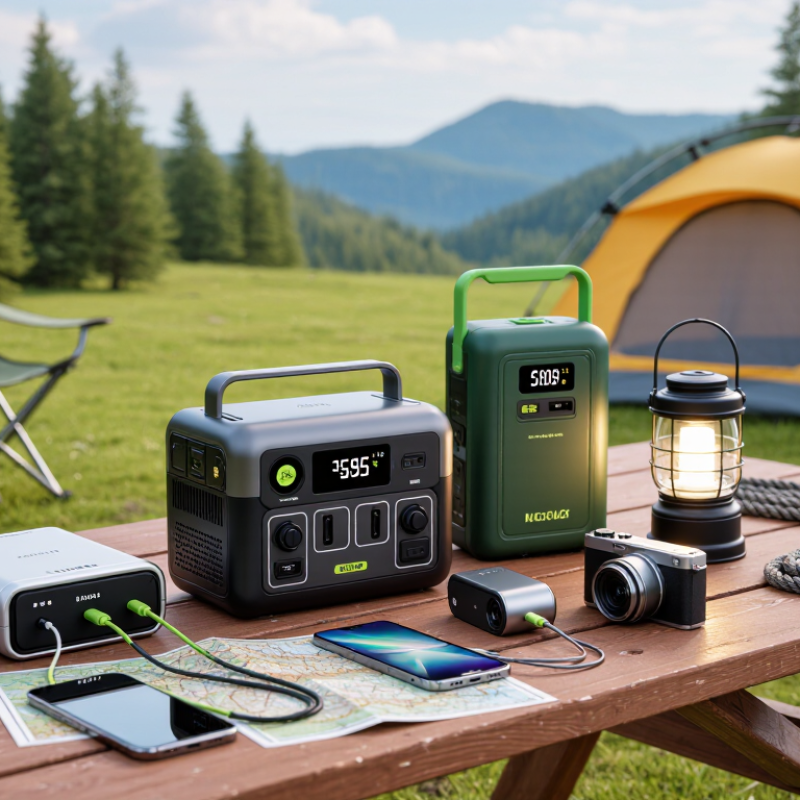
What Is the Best Outdoor Power Bank from China?
An outdoor power bank must survive dust, rain, drops, and sudden temperature changes. Capacity matters, but the printed mAh figure can mislead buyers. A 20,000 mAh battery at 3.7 volts stores about 74 Wh before conversion losses. IATA’s 2025 passenger baggage guidance generally permits power banks up to 100 Wh in carry-on baggage. This makes a 20,000 mAh model practical for travel and day hikes. However, actual output depends on voltage conversion, cable quality, and battery age.
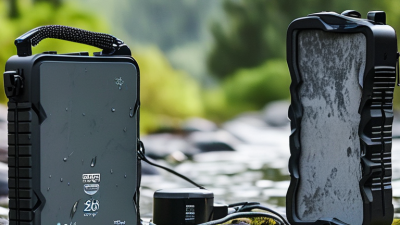
Safety and weather resistance matter just as much. Look for lithium-battery transport testing under UN 38.3 and cell safety testing aligned with IEC 62133-2. An IP-rated enclosure, defined by IEC 60529, offers clearer protection than vague claims such as “rainproof.” USB-C Power Delivery can charge phones faster, while a regulated output protects sensitive devices. The unit should also include overcharge, overheat, short-circuit, and over-discharge protection. I still distrust extremely high-capacity claims with unusually light housings. Physics rarely gives free capacity.
Tips: Check watt-hours, not only mAh. Test the bank outdoors before a long trip. Keep it away from direct heat and freezing surfaces. Choose textured sides for wet hands and a covered port for muddy campsites. A built-in light is useful, but it should not replace a proper torch. One overlooked detail: charging speed falls in cold weather, so leave extra capacity for real conditions.
| Evaluation Dimension | Suitable Outdoor Target | Why It Matters Outdoors | Practical Assessment |
|---|---|---|---|
| Battery Capacity | 20,000–30,000 mAh | Provides multiple phone charges for hiking, camping, travel, and emergency use without excessive size. | Best general range |
| Energy Capacity | Approximately 74–111 Wh | A 20,000 mAh battery is approximately 74 Wh when calculated at a nominal 3.7 V; a 30,000 mAh battery is approximately 111 Wh. | Check the watt-hour rating when comparing products or preparing for air travel. |
| Expected Smartphone Charges | About 4 charges from 20,000 mAh; about 6 charges from 30,000 mAh | The estimate assumes a 15 Wh smartphone battery and approximately 80% overall energy-transfer efficiency. | Actual results vary with phone capacity, cable quality, temperature, and charging losses. |
| USB-C Output | At least 20 W; 30–65 W for tablets and compatible laptops | Higher USB-C Power Delivery output supports faster charging and a wider range of devices. | Confirm both the power bank output and the device's required charging wattage. |
| Number of Ports | At least one USB-C port and one USB-A port | USB-C supports modern fast charging, while USB-A remains compatible with many lights, cables, and accessories. | Check whether the stated maximum output applies when several ports are used simultaneously. |
| Weather Resistance | IP54 minimum; IP65 or higher for demanding conditions | IP54 provides protection against limited dust and water splashes; IP65 provides dust-tight protection and resistance to water jets. | An IP rating applies only when all covers are properly closed and the product has been tested accordingly. |
| Operating Temperature | Approximately 0°C to 35°C for charging; wider discharge range preferred | Lithium-ion batteries generally charge less efficiently in cold conditions, and charging below freezing can damage the cells. | Follow the manufacturer's specified charging and discharging temperature limits. |
| Safety Protection | Overcharge, over-discharge, over-current, short-circuit, and over-temperature protection | Multiple protection systems reduce risks caused by abnormal charging, damaged cables, overheating, or unstable loads. | Look for clear electrical specifications, safety testing information, and an undamaged enclosure. |
| Portability | Preferably under 500 g for regular hiking; heavier units for extended trips | Higher capacity usually increases weight and volume, so portability must be balanced against expected energy demand. | Compare actual dimensions and net weight rather than relying only on capacity labels. |
| Recharge Options | USB-C input; optional solar-compatible input for long-term remote use | USB-C is widely available and generally faster than older input standards. Solar charging is useful as a supplementary option, not a guaranteed primary source. | Solar charging speed depends heavily on sunlight, panel size, orientation, and weather. |
| Air-Travel Consideration | Keep the battery at or below 100 Wh when possible | Many aviation rules allow spare lithium batteries up to 100 Wh in carry-on baggage, while larger capacities may require airline approval or may not be accepted. | Check the airline's current policy before travel; spare power banks should not be placed in checked baggage. |
Calculation note: Nominal energy is estimated as capacity in ampere-hours × 3.7 V. Actual usable energy is lower because of voltage conversion and charging losses. Product suitability should be verified through the manufacturer's technical specifications and applicable safety testing.


 WS Kate
 Weshare Power Bank