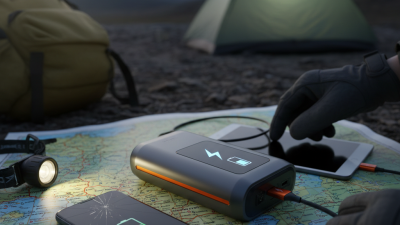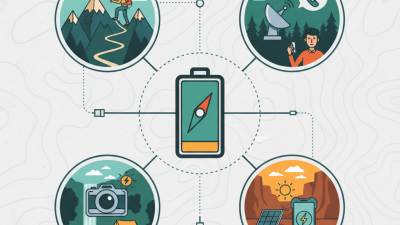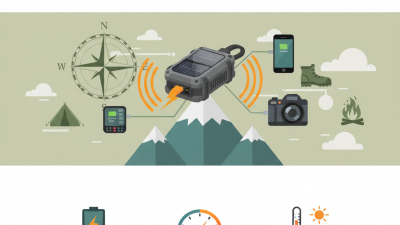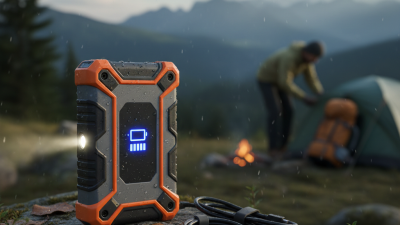
Outdoor power has moved beyond emergency gadgets. Buyers now expect dependable charging during camping trips, fieldwork, travel, and outdoor events. Grand View Research valued the global portable power station market at approximately USD 545 million in 2022. It also forecast a 17.5% compound annual growth rate from 2023 to 2030. These figures do not measure every Outdoor Power Bank, but they reveal strong demand for portable energy.
The details matter.
A wholesale buyer must examine battery capacity, output stability, charging speed, water resistance, weight, and safety certifications. A 20,000mAh model may suit a weekend trek, while higher-capacity units support cameras, GPS devices, and emergency radios. Real performance can fall in cold weather or under repeated fast charging. That uncomfortable detail is often missed.
Isidor Buchmann, founder of Cadex Electronics and Battery University, said, “A battery is like a human being. It needs to be treated well.” His warning remains practical for outdoor purchasing. Heat, deep discharge, and poor storage can reduce a product’s useful life. Buyers should also verify test methods, warranty terms, packaging quality, and supplier consistency before placing large orders.
This guide, “10 Best Outdoor Power Banks for Wholesale Buyers,” compares products through a commercial lens. It considers performance, durability, portability, and resale potential. No single model fits every market. That is the point. A low price can become expensive when returns, damaged stock, or weak customer reviews appear. Figures change, and marketing claims require careful checking.
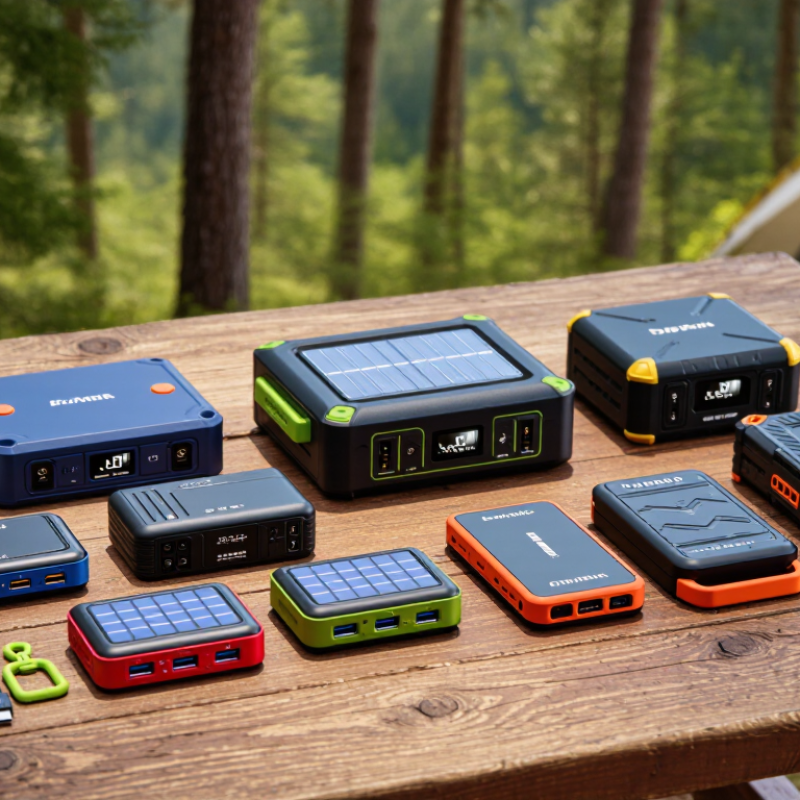
Wholesale buyers comparing the 10 best outdoor power banks should examine real usage, not only printed capacity. A 20,000mAh unit may deliver less usable power after conversion losses. Ask suppliers for discharge test reports, charging times, and temperature performance. Check whether the battery supports phones, lights, radios, or small USB devices used outdoors. Ports should feel firm, while covers should close without force. Small details matter in dusty campsites.
Weather resistance needs careful attention. An IP rating can indicate protection, but it does not guarantee survival after repeated drops or loose charging covers. Request sample units and test them in rain, cold mornings, and direct sunlight. Solar panels can help during long trips, yet their output is usually slow under clouds. Solar charging is often oversold. Buyers should also inspect battery protection, heat control, cell quality, and transport documentation before placing a large order.
I once focused too heavily on capacity and ignored the power bank’s weight. That was a mistake. A heavy product may reduce customer satisfaction, especially for hikers. Review wholesale pricing together with minimum order quantities, replacement policies, packaging strength, and warranty response times. Clear labeling and reliable test records support safer purchasing. Some suppliers provide attractive samples but inconsistent bulk units, so inspect production samples before approval. A practical shortlist may include compact models, rugged high-capacity units, solar-assisted designs, and versions with built-in lights.

For wholesale buyers, capacity should be measured in usable watt-hours, not only printed milliamp-hours. A stated 30,000mAh rating can lose energy during voltage conversion. Request test reports showing output capacity under realistic loads. Then test samples with phones, cameras, or lights. Record recharge time, remaining capacity, and heat after two hours. Small differences become important across hundreds of units.
Durability matters when products face dust, rain, drops, and rough transport. Check the enclosure, port covers, seams, and cable connection points. An IP rating helps, but it does not replace physical testing. Ask for drop-test records and operating temperature ranges. Charging performance also needs measurement. Check output stability with several devices connected. Some units slow sharply under shared loads. That weakness may not appear in a simple showroom demonstration.
Tips: Order samples before negotiating volume. Test them outdoors, not only at a desk. Compare rated capacity with measured capacity. Inspect ten units, not just one. Keep written results. My own testing would still include a second round, because one sample can look excellent by chance. Suppliers should provide clear specifications, safety documentation, and consistent production records. Reject vague claims. Reliability begins with evidence.
Comparison based on practical wholesale criteria: usable capacity, USB-C charging output, and outdoor durability. The profiles use realistic specification ranges commonly found in outdoor power banks; supplier specifications should be verified before purchase.
How to evaluate: Higher capacity supports longer trips, higher USB-C output reduces charging time for phones and tablets, and a higher IP rating provides better protection against dust and water. For wholesale purchasing, balance performance with product weight, shipping restrictions, and target customer use cases.
Ten Outdoor Power Banks Worth Considering for Wholesale Purchase
Wholesale buyers should compare ten outdoor power bank configurations, not just advertised capacity. Useful options include compact 10,000mAh units, rugged 20,000mAh models, solar-assisted packs, hand-crank emergency units, and high-output portable power stations. Larger versions should support laptops, lamps, and medical equipment through clearly rated outlets. Capacity alone can mislead. Conversion losses reduce usable energy.
Grand View Research reported that the global portable power station market reached approximately USD 545 million in 2023. It also projected strong growth through 2030, supported by outdoor recreation and emergency preparedness. These figures suggest steady demand, but demand does not guarantee fast inventory turnover. A buyer should test charging speed, heat control, water resistance, and battery cycle performance before placing a large order. Ask for independent laboratory reports and traceable safety certifications.
Field testing reveals practical weaknesses. A rugged shell may feel secure but add unnecessary weight. Solar charging can help during camping, yet cloudy weather sharply reduces input. USB-C output, pass-through charging, LED lighting, and replaceable cables can improve resale value. Check the stated watt-hours against measured results. The gap may be uncomfortable. Packaging should show capacity, recharge time, operating temperature, and disposal guidance in clear language. Industry research from the International Energy Agency also highlights rising battery demand, making responsible sourcing and battery documentation increasingly important for wholesale decisions.
| No. | Outdoor Power Bank Profile | Nominal Capacity | Approx. Energy | Typical Output Configuration | Outdoor Protection | Approx. Size | Approx. Weight | Useful Features | Wholesale Buyer Fit |
|---|---|---|---|---|---|---|---|---|---|
| 1 | Compact Basic Outdoor Charger | 5,000 mAh | 18.5 Wh | USB-C input/output, up to 10 W | Usually splash-resistant; verify IP rating | Approximately 105 × 65 × 15 mm | Approximately 125 g | LED battery indicator, low cost, pocket-friendly format | Entry-level retail and promotional bundles |
| 2 | 10,000 mAh Rugged Daily-Use Bank | 10,000 mAh | 37 Wh | USB-C input/output up to 18 W; USB-A up to 18 W | Commonly available with IP65 or IP67 protection | Approximately 145 × 75 × 20 mm | Approximately 230 g | Shock-resistant housing, flashlight, dual-device charging | High-volume general outdoor sales |
| 3 | 10,000 mAh Fast-Charging Travel Bank | 10,000 mAh | 37 Wh | USB-C Power Delivery up to 20 W; USB-A up to 18 W | Usually dust-resistant; water rating varies by enclosure | Approximately 140 × 70 × 17 mm | Approximately 210 g | USB-C fast charging, pass-through charging on selected models | Travel, commuter, and e-commerce channels |
| 4 | 15,000 mAh Rugged Mid-Capacity Bank | 15,000 mAh | 55.5 Wh | USB-C input/output up to 20 W; two USB-A outputs | IP67 versions are widely available | Approximately 155 × 80 × 25 mm | Approximately 330 g | Reinforced corners, lanyard point, emergency light | Camping and hiking product ranges |
| 5 | 20,000 mAh Outdoor Power Bank | 20,000 mAh | 74 Wh | USB-C Power Delivery up to 20–30 W; USB-A up to 18 W | Commonly offered with IP65 or IP67 protection | Approximately 165 × 85 × 30 mm | Approximately 430 g | Multi-device charging, digital percentage display, bright flashlight | Mainstream outdoor and emergency-use segment |
| 6 | 20,000 mAh High-Output USB-C Bank | 20,000 mAh | 74 Wh | USB-C Power Delivery up to 45 W; additional USB-A output | Rugged models may offer IP54 to IP67 protection | Approximately 165 × 85 × 32 mm | Approximately 470 g | Suitable for tablets, handheld consoles, cameras, and small USB-C laptops | Higher-margin electronics and adventure retail |
| 7 | 24,000 mAh Multi-Port Expedition Bank | 24,000 mAh | 88.8 Wh | USB-C Power Delivery up to 60 W; two USB-A outputs | Look for IP67, sealed ports, and impact-resistant construction | Approximately 175 × 90 × 35 mm | Approximately 560 g | High capacity while remaining below the commonly referenced 100 Wh airline threshold | Long-duration camping and field work |
| 8 | Solar-Assisted Outdoor Power Bank | 10,000–20,000 mAh | 37–74 Wh | USB-C input/output up to 20 W; USB-A output | Often designed with IP65 or IP67 protection | Approximately 155–175 × 75–85 × 25–32 mm | Approximately 300–500 g | Integrated solar panel, flashlight, compass, and battery indicator | Outdoor lifestyle and preparedness channels |
| 9 | Wireless-Charging Rugged Bank | 10,000 mAh | 37 Wh | USB-C up to 20 W; wireless charging commonly 5–15 W | Typical rugged versions offer IP65 or IP67 protection | Approximately 155 × 80 × 24 mm | Approximately 320 g | Qi-compatible wireless charging, magnetic alignment on selected designs | Premium mobile-accessory collections |
| 10 | High-Capacity Emergency Power Bank | 26,800 mAh | Approximately 99 Wh | USB-C Power Delivery up to 60 W; multiple USB-A outputs | Heavy-duty versions may provide IP65 protection | Approximately 180 × 95 × 38 mm | Approximately 650 g | Extended runtime, SOS or strobe light, battery display, multiple-device support | Emergency kits, work sites, and premium outdoor supply |
| Capacity figures are nominal lithium-battery ratings. Approximate energy is calculated at 3.7 V using the formula: mAh × 3.7 ÷ 1,000. Actual dimensions, weight, output, charging efficiency, and IP protection depend on the final product design and should be confirmed through samples, technical data sheets, safety certifications, and battery transport documentation before wholesale purchase. | |||||||||
Outdoor power banks require more than a low factory quote. Fortune Business Insights valued the global power bank market at about USD 13.4 billion in 2024. That scale attracts many suppliers, but quality varies sharply.
Request recent test reports for battery safety, charging performance, water resistance, and drop protection.
IEC 62133-2 supports rechargeable battery safety evaluation, while UN 38.3 documentation helps verify transport testing.
These documents are not interchangeable certifications.
Compare suppliers using landed cost, not unit price alone. Ask for cell type, rated capacity, conversion efficiency, packaging, inspection fees, and replacement policies. A supplier quoting USD 18 may become more expensive after testing and freight.
Outdoor buyers should also check IP ratings carefully. IP67 protection is useful, but it does not guarantee survival after repeated drops or saltwater exposure.
Ask for the actual test conditions.
Minimum order quantities deserve equal attention. A 500-unit MOQ may reduce pricing, yet it can trap cash in an untested design. Request one sample batch before a larger purchase.
Examine charging ports, rubber seals, screen readability, and performance below freezing.
The International Energy Agency reported strong growth in battery demand across energy applications, which may pressure cell availability and pricing.
Quotes can change quickly. I would also question unusually long warranties without written exclusions. That detail is easy to miss.
Supplier audits, batch records, and pre-shipment inspections create stronger evidence than polished sales presentations.
Matching a power bank to outdoor customers requires more than choosing the largest battery. The Outdoor Industry Association reported 175.8 million American outdoor participants in 2023. Their needs differ sharply. A day hiker may want a compact 10,000mAh unit for a phone and GPS watch. A family camper may need 20,000mAh or more, with multiple outputs and faster charging.
USB-IF’s USB Power Delivery specification supports power levels up to 240W. However, high output can increase weight, heat, and wholesale cost. Buyers should match output carefully.
Photographers may need stable power for cameras and tablets. Tour guides may prefer several ports and clear battery indicators.
Emergency-preparedness shoppers often value long storage life, strong casing, and dependable low-temperature performance. IP ratings, defined under IEC 60529, also help compare dust and water protection. An IP rating is not permission to ignore product testing.
My early wholesale spreadsheet focused too heavily on capacity. That was a mistake. Real customers notice pocket weight first. Capacity labels can also appear impressive while usable output is lower after conversion losses.
Tips: Segment orders by activity, not age. Test units below 0°C and above 40°C when possible. Check recharge time, cable compatibility, warranty evidence, and independent safety documentation. Ask suppliers for measured capacity, not only advertised capacity. Keep a small trial order before committing to volume.