Emergency Power Bank Tips for Reliable Charging Anywhere?
In today’s fast-paced world, having a reliable Emergency Power Bank is essential. Dr. Emily Carter, a leading expert in portable energy solutions, emphasizes, “An emergency power bank can be a lifesaver in crucial moments." With our dependency on devices, losing power can disrupt communication and access to information.
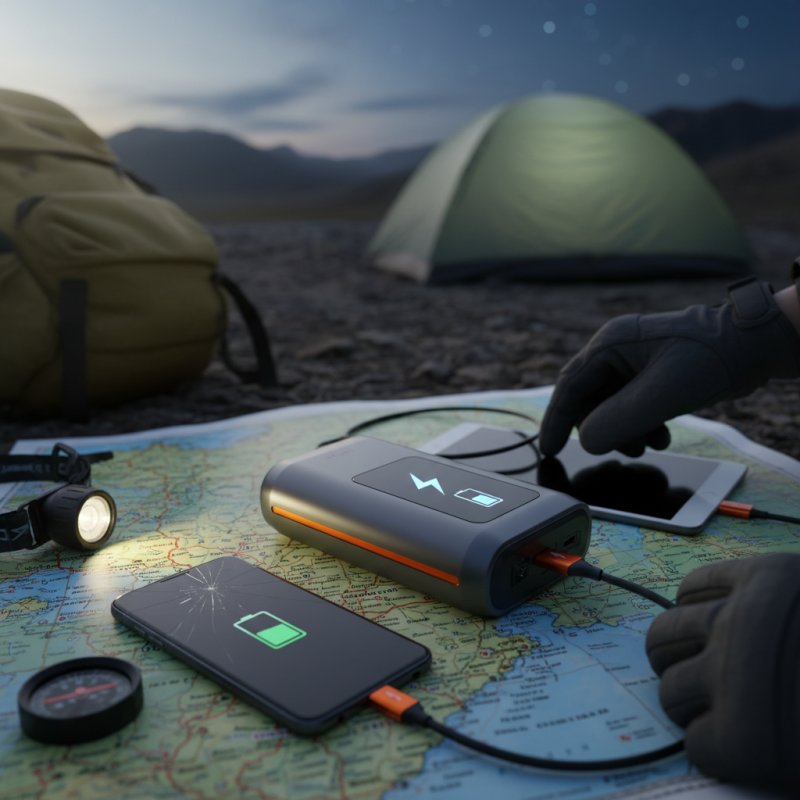
When traveling or during emergencies, the need for a portable power source becomes urgent. A fully charged Emergency Power Bank can keep your devices running at critical times. However, many users overlook the importance of maintenance. Regularly checking the battery level and ensuring proper storage can make a significant difference.
Choosing the right Emergency Power Bank requires some thought. Not every power bank is created equal. Some may offer quick charging, while others prioritize capacity. Understanding these nuances matters. The landscape of portable charging is evolving, but it is not without challenges. Users must remain informed to make the best choice for their needs.
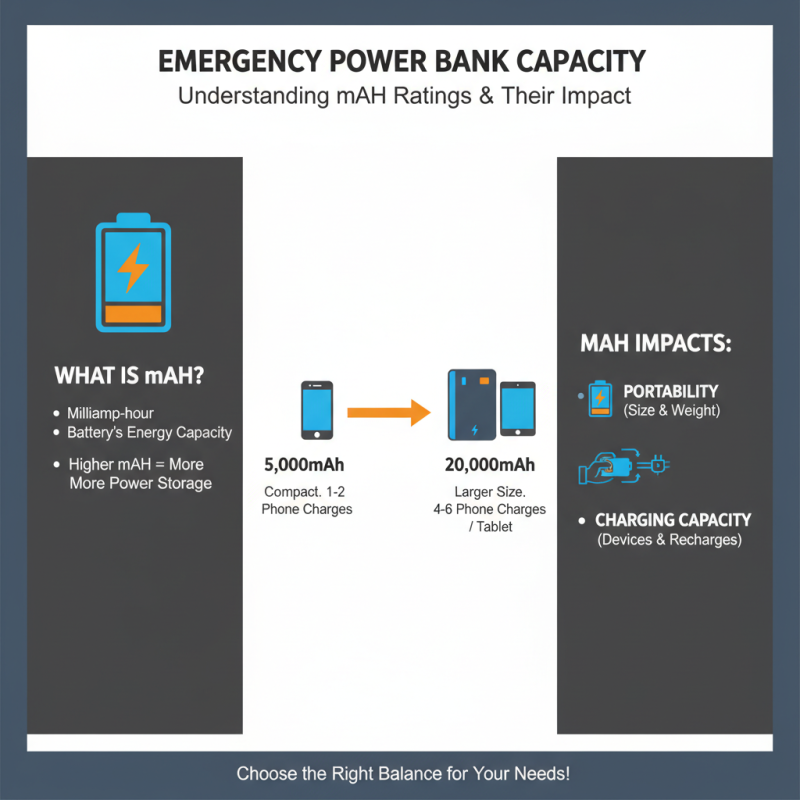
Emergency Power Bank Capacity: Understanding mAh Ratings and Their Impact
When choosing an emergency power bank, understanding mAh ratings is essential. The milliamp-hour (mAh) indicates the battery's energy capacity. A higher mAh means more power storage, but it also affects the bank's size and weight. For instance, a 10,000mAh power bank can charge a smartphone multiple times. Yet, portability may be compromised with larger capacities.
Not all situations require high-capacity banks. Smaller units, around 2,500mAh, may suffice for quick top-ups. They are lighter and more convenient. However, these won’t last through multiple charges. It's important to reflect on your specific needs. Hiking? A larger bank might be necessary. Running errands? A compact option could meet expectations. Balance is key, and everyone’s situation differs.
Choosing a power bank isn't just about capacity. Reliability and how you plan to use it matter too. Look for features like fast charging and multiple ports. These can enhance usability in emergencies. Weighing the trade-offs will guide better decisions. Exploring various options can be enlightening. However, always remember to consider future needs.
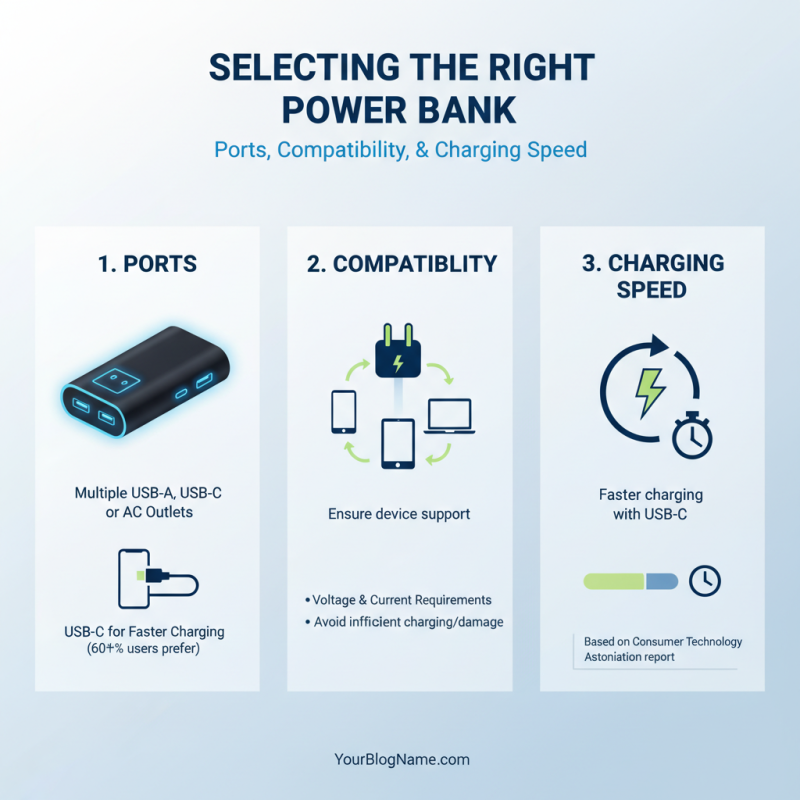
Selecting the Right Power Bank: Ports, Compatibility, and Charging Speed
When selecting the right power bank, consider the ports available. Many power banks come with multiple USB-A, USB-C, or even AC outlets. A report from the Consumer Technology Association reveals that over 60% of users prefer a power bank with USB-C ports for faster charging. Compatibility is also essential. Ensure that the power bank supports the devices you own. Different gadgets have varying voltage and current requirements. Using the wrong power bank can result in inefficient charging or even damage.
Charging speed is a crucial factor. Fast charging technologies can significantly reduce downtime. According to a study by Statista, 75% of users rank charging speed as a top priority. Look for power banks that support Quick Charge or Power Delivery. These features can boost charging efficiency and save time.
Tips: When traveling, choose a power bank with at least 20,000 mAh. This capacity can charge most smartphones multiple times. Regularly check the battery health to avoid unexpected shutdowns. If a power bank seems bulky, weigh its capacity against your needs. Not all high-capacity power banks are portable. Assess your requirements carefully to make an informed choice.
Real-World Usage: Average Charging Times for Popular Devices
When you’re on the go, knowing the average charging times for your devices is essential. Different devices require different charging durations. For example, a typical smartphone can take about 1.5 to 2 hours to charge fully. Tablets usually take longer, around 3 to 4 hours, while laptops can require up to 8 hours, depending on the model. According to a recent industry report, these charging times can be affected by factors like battery capacity and charger output.
It's important to choose a power bank that suits your needs. For optimal results, look for a power bank with at least 10,000 mAh capacity. This allows for multiple charges and supports a range of devices. Ensure it has multiple output ports. This way, you can charge several devices simultaneously. Many experts suggest checking the output voltage too. A 2.1A output is ideal for tablets.
Be aware that not all power banks are created equal. Some may not provide enough power to charge larger devices efficiently. Reliability varies significantly across brands. Regularly test your power bank to ensure it meets your charging needs. Keeping your power bank charged is a key to emergency preparedness.
Emergency Power Bank Tips for Reliable Charging Anywhere
| Device |
Battery Capacity (mAh) |
Average Charging Time (hours) |
Power Bank Capacity (mAh) |
Estimated Charges |
| Smartphone A |
4000 |
1.5 |
10000 |
2.5 |
| Tablet B |
6000 |
2.5 |
10000 |
1.67 |
| Laptop C |
5000 |
3.0 |
20000 |
4.0 |
| Smartwatch D |
300 |
0.5 |
10000 |
33.33 |
| Bluetooth Earbuds E |
50 |
0.2 |
10000 |
200 |
Safety Considerations: Protecting Your Devices and Power Bank
When using power banks, safety is paramount. A report from the Consumer Electronics Safety Commission highlights that 30% of reported incidents involve overheating or battery malfunctions. To mitigate these risks, it’s crucial to purchase power banks that comply with safety standards. Look for certifications like CE or UL. These marks indicate adherence to safety protocols.
Avoid using a damaged power bank. Invisible cracks can lead to short circuits. A study from Battery University suggests that overcharging can degrade battery life by as much as 20%. Use smart chargers that automatically stop charging when devices are full. This feature protects both your power bank and the device.
In extreme temperatures, power banks can become unsafe. For instance, exposure to high heat can cause batteries to swell or even rupture. A practical tip is to keep your power bank in a temperature-controlled environment, ideally between 20°C to 25°C (68°F to 77°F). Regularly check for any signs of damage. Safety reflects on how well you protect your devices. Making informed choices can prevent accidents, ensuring reliable charging wherever you are.
Best Practices for Maintaining Power Bank Performance and Longevity
Maintaining your power bank is essential for achieving reliable performance. Research indicates that nearly 40% of users experience diminished power bank efficiency over time. This drop can stem from several factors, including temperature, usage patterns, and charging habits.
Keeping your power bank at room temperature is crucial. Extreme heat or cold can degrade the battery. According to industry reports, batteries lose about 15% of their capacity for every 10 degrees Celsius above optimal temperature. Avoid exposing your device to direct sunlight or leaving it in a hot car, as this accelerates wear and tear.
Proper charging techniques also play a vital role. While it might be tempting to use your power bank daily, consider a routine that conserves its capacity. An optimal discharge range is 20% to 80%. Fully draining or constantly topping off your power bank can significantly shorten its lifecycle. Some users overlook this critical practice, leading to unexpected failures during emergencies.
Emergency Power Bank Charging Efficiency
This bar chart displays the charging efficiency of different power banks. As indicated, Power Bank C offers the highest efficiency at 90%, while Power Bank D shows the lowest at 60%. Understanding these efficiency rates can help users choose the right power bank for their emergency charging needs.






 WS Kate
 Weshare Power Bank