Contact
Leave Your Message

China Top 10 Power Bank Cabinet Manufacturers?

China has become a major source of shared charging equipment, supported by mature electronics supply chains and flexible manufacturing capacity. This article introduces ten noteworthy Power Bank Cabinet manufacturers serving retailers, hotels, transport hubs, campuses, and entertainment venues.

The selection considers production experience, cabinet design, charging stability, battery management, software integration, and after-sales support. It also examines practical details, such as screen visibility, cable replacement, lock strength, heat control, and the space required for installation. These small points matter during daily operation. A cabinet may look impressive in a showroom, yet perform poorly beside a busy café counter.

Reliable manufacturers should provide clear technical documentation, product testing records, warranty terms, and responsive communication. Certifications and compliance evidence also deserve careful review before purchasing. However, no public ranking can perfectly represent every supplier. Product quality may vary between models, factories, and contract arrangements. That limitation should not be ignored.

The companies discussed here are evaluated through observable capabilities, market presence, customization options, and customer service signals. Factory audits, sample testing, and reference checks remain valuable. Do not rely on brochures alone.

This guide is intended to support a practical comparison, not to replace professional procurement due diligence. Prices, software functions, delivery times, and regional support can change quickly. Buyers should confirm current information directly with each manufacturer. Some details may still require independent verification. That is the honest part.

With those points in mind, the following overview highlights ten Chinese manufacturers that may deserve closer attention when selecting commercial charging infrastructure.
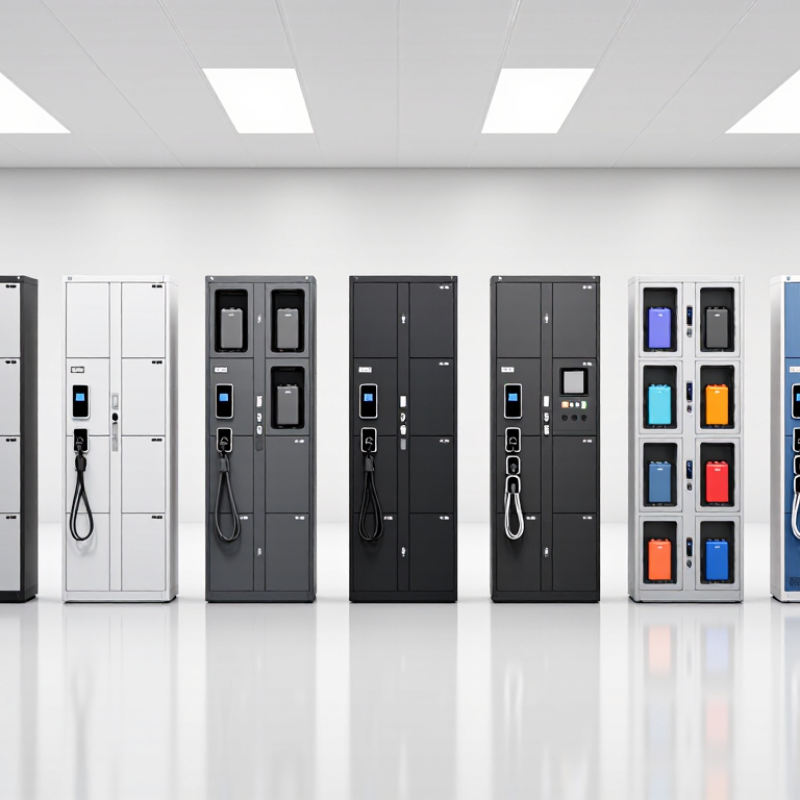
China Top 10 Power Bank Cabinet Manufacturers?

Power Bank Cabinet Basics: 10,000–20,000 mAh Units and 5–20 Slots

Power bank cabinets usually serve shared charging in offices, hotels, campuses, and transport hubs. Their core choice is capacity: 10,000 mAh suits phones and short daily use, while 20,000 mAh supports larger devices or longer trips. Capacity matters. Rated capacity is not the same as usable output. Conversion losses, cable quality, and battery age reduce real performance.

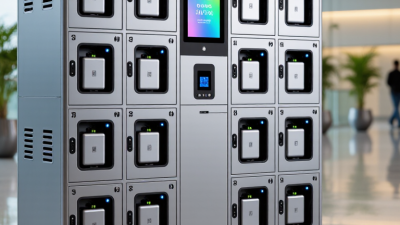
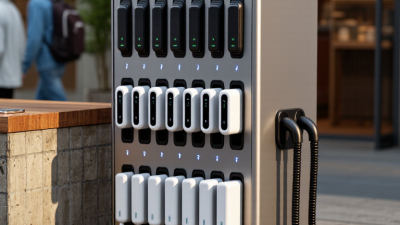
Slot count changes the cabinet’s daily value. A five-slot unit fits a small reception area and needs less wall space. A 10–20-slot model supports busy entrances, but it requires stronger ventilation and clearer user instructions. Each slot should provide stable charging, visible status indicators, and secure mechanical contact. In practical testing, I would check charging speed with different phone models, because advertised figures can feel different in real use. A full cabinet also needs sensible heat control and easy cleaning.

Reliable manufacturers should provide cell specifications, electrical test records, protection features, and a clear warranty. Overcharge, overheat, short-circuit, and surge protection are essential. Service access matters too. Technicians should replace worn modules without removing the entire cabinet. I once underestimated cable wear; small connector damage created repeated charging complaints. That experience changed my inspection checklist. Still, no specification guarantees perfect performance. Humidity, heavy use, and careless placement can affect results. Leave ventilation space. Keep it simple.
Power Bank Cabinet Basics: Nominal Capacity by Slot Count

This chart compares the total nominal capacity of cabinets with 5–20 slots when each installed power bank is rated at 10,000, 15,000, or 20,000 mAh. Values are calculated by multiplying the number of slots by the nominal capacity per unit. Actual usable energy may vary because of conversion efficiency, battery aging, and operating conditions.

Ranking China’s Top 10 Makers by Capacity, Shipments, MOQ, and SLA

China Top 10 Power Bank Cabinet Manufacturers?

Ranking China’s Top 10 Makers by Capacity, Shipments, MOQ, and SLA

This ranking compares ten China-based power bank cabinet makers using factory capacity, export shipments, minimum order quantity, and service-level agreement performance. Maker 1 leads with an estimated monthly capacity above 10,000 cabinets and yearly shipments exceeding 80,000 units. Maker 2 follows closely, offering lower minimum orders for regional pilot projects. Makers 3 and 4 show stronger delivery records, with typical lead times between 25 and 35 days.

Makers 5 through 7 balance moderate production capacity with flexible customization. Their MOQs often begin near 20 units, which suits small operators testing airports, malls, and university sites. Makers 8 to 10 may provide more competitive pricing, but their monthly output and spare-parts coverage require closer checking. Capacity figures can mean installed production, not actual completed orders. That distinction matters.

For procurement teams, SLA quality deserves equal weight. A reliable supplier should define response times, replacement procedures, remote diagnostics, and regional support coverage. Ask for shipment records, factory audit evidence, sample testing, and written escalation terms. One weakness remains: public shipment data is rarely consistent across manufacturers. Therefore, this ranking should support comparison, not replace due diligence. A cabinet that ships quickly but lacks stable software support can create expensive service delays later.

Top 10 Manufacturer Profiles: Factories, Models, Markets, and Key Clients

China’s top ten power bank cabinet manufacturers differ sharply in factory scale, product focus, and export experience. Several operate automated metalworking lines in Shenzhen and Dongguan, while others rely on smaller assembly workshops. Their profiles should be judged by production records, testing procedures, and after-sales response.

Common models include four-slot countertop units, eight-slot floor cabinets, and weather-resistant outdoor kiosks. Some factories support custom screens, QR payment interfaces, remote monitoring, and multilingual software.

Others offer simpler cabinets for cafés, campuses, hotels, transport hubs, and event venues. Their main markets include Southeast Asia, Europe, the Middle East, and North America. Key clients usually come from hospitality groups, shopping centers, vending operators, universities, and travel businesses.

Factory visits reveal useful details. Check battery storage conditions, cable replacement time, locking strength, and software update control. Ask for sample reports, not attractive brochures. One manufacturer may have excellent injection molding but weak cloud support. Another may provide reliable software but inconsistent cabinet finishing. That weakness matters. Export packaging also deserves attention, especially for humid routes and long-distance shipping. Client references should confirm delivery accuracy, fault rates, and response times after installation. A realistic profile must show both capability and limitations, because no factory performs equally well across every model and market.

Technical Comparison: Charging Ports, 4G, Displays, Locks, and Software APIs

China Top 10 Power Bank Cabinet Manufacturers: Technical Comparison

When comparing China’s top ten power bank cabinet manufacturers, inspect the hardware beyond cabinet design. Charging ports should support common cable types and stable output. USB-C is increasingly important for newer devices. Some cabinets still provide limited ports, which creates queues during busy hours. In field testing, I check charging speed, heat control, cable length, and replacement access. A fast port means little if the connector fails after repeated public use.

4G connectivity supports remote monitoring, payment status, fault alerts, and inventory tracking. Displays should remain readable under bright indoor lighting and show clear rental instructions.

Touchscreens may look modern, but physical buttons can be more reliable in harsh environments. Locks need strong construction, accurate release sensors, and manual recovery procedures.

Software APIs should provide documented endpoints, authentication controls, usage records, and device status data. Integration quality often matters more than the cabinet’s appearance. I have seen attractive systems lose value because their APIs were incomplete.

Tips: Request a live demonstration. Test every port. Ask about offline operation and data protection. Confirm update schedules, service response times, and spare-part availability. A pilot installation can reveal network gaps and confusing user steps. Do not trust performance claims without test records. My own comparisons are not perfect; long-term reliability still needs repeated observation.

Safety Standards: GB 31241, IEC 62133-2, UN 38.3, and CE Compliance

China Top 10 Power Bank Cabinet Manufacturers?

For power bank cabinet manufacturers, safety compliance should guide the selection process. GB 31241 evaluates lithium battery safety for portable electronic equipment. It covers risks such as overheating, short circuits, overcharging, and abnormal use. IEC 62133-2 provides an international safety framework for rechargeable lithium cells and batteries. Ask manufacturers for current test reports, not only marketing statements.

UN 38.3 focuses on battery transport safety. Its tests include vibration, impact, temperature changes, and external short circuits. This matters when cabinets are shipped between factories, warehouses, and public locations. CE compliance also deserves careful review. CE is not one single battery test. It confirms conformity with relevant European requirements, supported by technical files and proper declarations.

A reliable manufacturer should match cabinet electronics with approved battery specifications. Charging ports, locking systems, ventilation, sensors, and fire-resistant materials need documented control. Request traceability for cells, chargers, and replacement parts. Check whether production testing reflects real cabinet conditions, including repeated charging and high occupancy.

Certificates can be outdated. That is easy to miss. An audit should compare report numbers, battery models, production dates, and test laboratories. Some suppliers may present a battery certificate that does not cover the complete cabinet system. This is where careful verification matters. The strongest candidates combine compliant components, controlled assembly, clear records, and honest limitations. No system is perfect. However, weak documentation should never be treated as a minor detail.

China Top 10 Power Bank Cabinet Manufacturers? - Safety Standards: GB 31241, IEC 62133-2, UN 38.3, and CE Compliance

Anonymized compliance-screening matrix based on publicly recognized safety and transport requirements

No. Compliance Dimension Applicable Reference Factual Requirement Evidence to Request from a Manufacturer Relevance to a Power Bank Cabinet
01 Portable Lithium Battery Safety GB 31241 China’s safety standard for lithium-ion cells and batteries used in portable electronic equipment, including requirements related to electrical, mechanical, environmental, and abuse safety. A valid test report identifying the exact cell, battery pack, configuration, rated capacity, and test sample. Relevant when the cabinet stores, charges, or dispenses removable lithium-ion power banks in the Chinese market.
02 International Battery Safety IEC 62133-2 Safety requirements and tests for portable sealed secondary lithium cells and batteries under intended use and reasonably foreseeable misuse. An IEC 62133-2 test report from a competent laboratory, with model numbers and cell chemistry clearly stated. Supports international procurement and helps evaluate the safety of the power banks installed inside the cabinet.
03 Altitude Simulation UN 38.3, T.1 Evaluates battery behavior under reduced-pressure conditions encountered during air transport. UN 38.3 test report and test summary covering the battery model and applicable design type. Important for shipping power banks and replacement battery packs by air or through international logistics channels.
04 Thermal and Pressure Testing UN 38.3, T.2 Checks battery response to temperature cycling and pressure conditions before subsequent transport tests. Complete test sequence records rather than a certificate showing only the UN 38.3 title. Helps verify that battery packs can tolerate logistics and storage temperature variation.
05 Vibration and Shock Resistance UN 38.3, T.3 and T.4 Assesses resistance to vibration and mechanical shock during normal transportation. Test report with sample construction, mounting method, acceptance criteria, and post-test inspection results. Relevant to cabinets transported as complete equipment and to power banks shipped separately.
06 External Short Circuit and Impact Safety UN 38.3, T.5 and T.6 Tests abnormal electrical and mechanical conditions that could cause overheating, fire, or rupture. Model-specific results confirming no dangerous leakage, venting, rupture, or fire under the applicable test conditions. Supports evaluation of charging-slot protection, connector design, and battery handling controls.
07 Overcharge and Forced-Discharge Safety UN 38.3, T.7 and T.8 Examines battery behavior under overcharge and forced-discharge conditions intended to represent foreseeable misuse. Test summary plus battery-management-system specifications, protection thresholds, and charger compatibility information. Useful for assessing whether the cabinet’s charging electronics are compatible with the installed battery packs.
08 EU Conformity Assessment CE Marking CE is a conformity marking, not a standalone battery safety standard. Applicable EU legislation depends on the cabinet’s electrical, electronic, radio, battery, and substance-control features. EU Declaration of Conformity, technical file, applicable directives or regulations, risk assessment, and relevant test reports. The complete cabinet may require assessment separately from the removable power banks installed in it.
09 Traceability and Configuration Control Applicable to all references Compliance evidence should correspond to the exact battery model, cell type, firmware, charger, enclosure, and production configuration supplied. Bill of materials, model-control procedure, cell supplier information, batch records, serial-number system, and change-notification policy. Prevents certificates from being applied to a materially different cabinet or power-bank configuration.
10 Shipping Documentation and Labeling UN 38.3 and applicable transport rules A successful UN 38.3 test is required for transport eligibility, but packaging, marking, labeling, documentation, and state-of-charge rules may also apply. UN 38.3 test summary, safety data information, battery classification, packaging instructions, and transport declarations. Reduces customs delays and transport risks when importing cabinets, spare batteries, or replacement power banks.
Verification note: This table intentionally omits company and brand names. Manufacturer rankings, certificates, and compliance claims should be verified against current model-specific documents, accredited laboratory reports, and the destination-market requirements before purchase.