Choosing China’s best Power Bank Cabinet suppliers requires more than comparing prices and product photos. Global buyers need evidence of manufacturing experience, stable quality control, and practical after-sales support. A reliable supplier should explain battery compatibility, charging capacity, cabinet materials, locking systems, and software functions clearly. They should also provide test reports, sample units, factory information, and references from suitable markets.
Details matter.
During evaluation, inspect how each cabinet handles daily use. Check the screen brightness, cable arrangement, charging speed, heat management, and return process. A well-designed unit should remain stable in busy locations such as airports, hotels, shopping centers, and universities. It should also support clear branding without reducing ventilation or service access. Suppliers with professional engineering teams can usually discuss firmware updates, remote monitoring, spare parts, and installation guidance in practical terms.
However, no supplier is perfect. Product quality may vary between batches, and advertised software features may require further confirmation. A factory visit or independent inspection can reveal details that brochures miss. Buyers should verify applicable safety certifications, electrical standards, export documents, warranty terms, and local compliance requirements before placing an order. Communication quality is another useful signal. Slow answers today may become slower support after delivery.
The strongest Chinese suppliers combine production capability with transparent communication. They accept reasonable customization, document quality checks, and respond responsibly when problems occur. A careful comparison helps global buyers select cabinets that are safer, easier to maintain, and better suited to real operating environments. Price matters, but dependable performance matters longer.
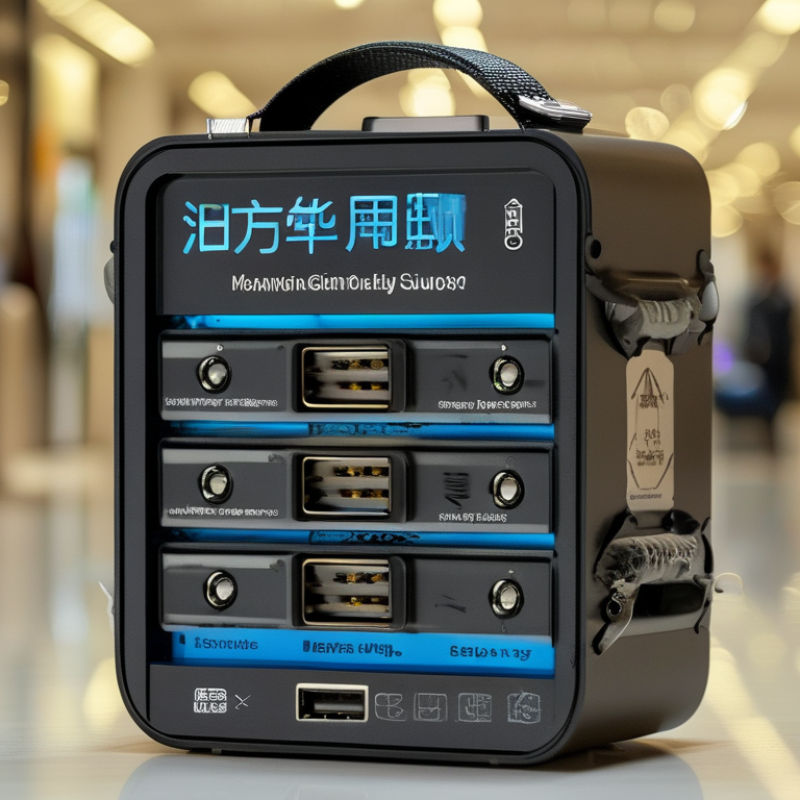
For global buyers, power bank cabinets commonly offer 20–60 bays. This range suits cafés, airports, campuses, and shopping centers. A 20-bay unit fits smaller spaces. A 60-bay cabinet supports heavier traffic. This range is practical. GSMA’s Mobile Economy 2024 report recorded 5.6 billion unique mobile subscribers worldwide in 2023. That large user base supports demand for accessible charging services.
Charging ports need careful evaluation. USB-C should support modern phones and tablets, while USB-A remains useful for older devices. Check output ratings, cable replacement, ventilation, and battery protection. The International Energy Agency reports that global electric car sales exceeded 14 million in 2023, showing how quickly rechargeable technology is expanding. Yet, bigger is not always better. In practice, poor placement can leave half the bays unused. Rental models usually charge by time, return location, or subscription access. Operators should review checkout speed, deposit handling, remote monitoring, and return rates. A low rental fee may still fail if users cannot find a nearby return cabinet.
Tips: Measure peak foot traffic before choosing 20, 40, or 60 bays. Test every port with different devices. Ask suppliers for safety test records, warranty terms, and local electrical compliance documents. Data from Grand View Research places the global power bank market on a strong growth path through 2030, but forecasts are not guarantees. Seasonal demand, maintenance costs, and user behavior can change the result.
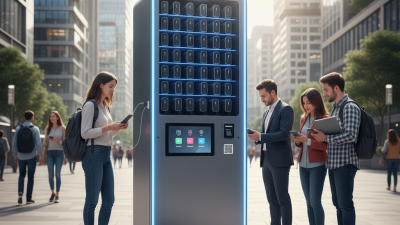
Standard cabinet configurations commonly scale from 20 to 60 bays. Each bay normally includes one charging position, so the number of available charging ports rises with cabinet capacity. In a rental model, users typically scan a code to borrow a power bank and return it to any compatible cabinet in the service network.
A reliable supplier must match every certificate to the exact cabinet model. CE marking supports applicable European Union requirements, but it is not always an independent safety certificate. FCC compliance concerns electromagnetic emissions in the United States. RoHS controls restricted substances, including lead, mercury, and certain flame retardants. UN38.3 covers lithium battery transport testing, including altitude simulation, vibration, shock, and overcharge tests. IEC 62133-2 evaluates rechargeable lithium cells and batteries used in portable equipment. It is important, but it does not replace market-specific approvals.
The Global E-waste Monitor 2024 reported 62 million tonnes of electronic waste in 2022. It projects 82 million tonnes by 2030. This growth makes traceable battery sourcing more than a paperwork issue. Ask suppliers for full test reports, not only certificate covers. Check the model number, cell chemistry, rated capacity, testing laboratory, issue date, and production site. A tidy PDF folder can still hide an outdated report. That mistake is easy to make.
Tips: Request a sample cabinet before bulk orders. Confirm battery labels and protection settings. Verify UN38.3 documents with the testing body when possible. Review charger input ratings and local plug requirements. Keep records of firmware changes, replacement batteries, and factory inspections. Compliance should follow the shipped configuration, not an older prototype.
For global buyers, Shenzhen remains a practical manufacturing hub for power bank cabinets. Its OEM factories often combine sheet-metal processing, electronics assembly, and software testing under one roof. This reduces coordination delays. It also makes design changes easier. A useful cabinet sample should show solid hinges, clean welds, even powder coating, and clearly labeled charging bays. Small details matter.
Factory audits need more than a polished showroom. Buyers should verify production capacity, worker training, inspection records, and supplier traceability. Walk through the assembly line. Check whether components sit in labeled bins or mixed cartons. Ask for recent batch records, not prepared examples. Confirm how the factory handles damaged cells, cable failures, and software errors. Some suppliers answer confidently but provide weak evidence. That is a warning sign.
QC systems should cover incoming parts, assembly, aging tests, and final inspection. Inspectors can measure output voltage, charging stability, lock operation, cabinet alignment, and network connection performance. Random sampling alone may miss repeated defects, so critical functions deserve full testing. Request photos, test logs, and corrective-action reports for each production batch. I would also approve a pilot order before scaling. It costs more time, but an early mistake can become expensive. No audit is perfect; factory conditions may change after approval, so periodic rechecks remain necessary.
| Manufacturing Dimension | China Manufacturing Hub | Typical Supplier Capability | Recommended Buyer Verification Points | Relevant Technical, Compliance, or QC Reference |
|---|---|---|---|---|
| Product engineering and OEM development | Shenzhen and surrounding Pearl River Delta areas | Design support for cabinet structure, charging bays, cable routing, display panels, locks, cooling, software interfaces, and custom exterior panels. | Confirm ownership of CAD drawings, engineering change procedures, prototype approval records, firmware-control responsibility, and production sample sign-off. | Use an approved golden sample, controlled bill of materials, revision-controlled drawings, and documented engineering-change approval before mass production. |
| Sheet-metal cabinet production | Shenzhen, Dongguan, and Foshan | Laser cutting, CNC bending, welding, powder coating, screen printing, assembly, and integration of charging modules and electronic controls. | Audit incoming sheet-metal inspection, weld consistency, coating adhesion, edge finishing, dimensional control, and protection against corrosion during export transport. | Inspect dimensions against approved drawings; use coating-thickness measurement and visual standards for surface defects, sharp edges, dents, and color variation. |
| Battery and charging-system integration | Shenzhen, Huizhou, and Dongguan | Integration of removable power-bank modules, charging boards, adapters, connectors, protection circuits, status indicators, and optional networked monitoring. | Verify cell traceability, battery-management-system settings, overcharge and over-discharge protection, short-circuit response, temperature monitoring, and charging-current limits. | Request battery specifications, protection-circuit test records, charger input/output ratings, thermal test results, and compatibility testing between the cabinet and each approved module. |
| Factory audit structure | Applicable to export-oriented factories in major electronics hubs | Production, quality, purchasing, warehouse, engineering, and after-sales functions can be reviewed as separate control areas. | Check business licenses, production-site consistency, organization charts, subcontractor controls, capacity evidence, worker training, calibration records, and corrective-action history. | A practical audit should cover management systems, production flow, traceability, process controls, social-compliance requirements, environmental controls, and product-specific risks. |
| Incoming quality control | Common requirement for battery, electronic, and metal components | Inspection of cells or modules, PCBs, chargers, connectors, displays, locks, fasteners, cables, packaging materials, and coated cabinet parts. | Confirm approved-vendor lists, sampling plans, quarantine procedures, nonconforming-material controls, lot identification, and inspection records linked to purchase orders. | Use documented acceptance criteria for dimensions, electrical ratings, appearance, connector fit, insulation, labeling, and packaging condition. Measuring equipment should be calibrated. |
| In-process and final QC | Applicable to assembled cabinet production lines | Line checks for wiring, torque, charging performance, communication functions, locking mechanisms, display operation, cabinet stability, and final appearance. | Require 100% functional testing for safety-critical functions and define sampling levels for cosmetic, dimensional, and packaging inspections before shipment. | Typical controls include continuity testing, insulation checks where applicable, charging and discharging tests, burn-in or aging checks, alarm verification, and final checklist approval. |
| International battery transport readiness | Required for suppliers shipping lithium-battery products internationally | Preparation of battery transport documentation, packaging information, product labels, test reports, and shipment-specific dangerous-goods coordination. | Verify that the actual battery configuration and shipment packaging match the documentation. Confirm the supplier can provide current test reports for the shipped battery type. | UN 38.3 testing is widely used for lithium cells and batteries transported by air, sea, road, or rail. Transport rules and carrier requirements must be checked for each shipment. |
| Product safety and market compliance | Depends on the destination market and product configuration | Support for technical files, declarations, safety labeling, user manuals, electrical documentation, and market-specific certification coordination. | Identify the final selling countries before design freeze. Confirm whether requirements apply to the cabinet, power supply, battery module, radio functions, or all combined equipment. | Potentially relevant references include IEC 62133-2 for portable sealed secondary lithium cells and batteries, IEC 62368-1 for certain audio/video and ICT equipment, EMC requirements, and local electrical regulations. |
| Packaging and export logistics | Shenzhen, Guangzhou, Ningbo, and other export logistics centers | Export cartons, molded protection, palletization, moisture control, spare-parts packing, container loading, and shipment-document coordination. | Review drop-protection design, carton compression strength, pallet dimensions, gross-weight accuracy, loading photographs, moisture protection, and label consistency. | Packaging should be validated against cabinet weight, fragile electronic parts, battery transport conditions, stacking requirements, and the selected sea, air, rail, or road route. |
| After-sales and spare-parts support | Best assessed during supplier qualification | Remote troubleshooting, replacement modules, spare charging boards, locks, cables, displays, adapters, cabinet panels, and repair instructions. | Confirm warranty scope, response-time targets, spare-parts availability, serial-number tracking, failure-analysis procedures, and remote technical-support capability. | A suitable service system should include RMA records, root-cause analysis, corrective-action reports, service manuals, and a clear process for software or hardware revisions. |
| Buyer-side supplier selection priority | All China sourcing regions | The most suitable supplier is normally selected through a combination of engineering capability, verified production control, compliance readiness, and total landed cost. | Compare audited capacity, sample quality, test evidence, production transparency, communication quality, tooling ownership, minimum order requirements, lead time, and service resources. | Do not rely only on catalog specifications. Approve the supplier after document review, factory audit, sample testing, pilot production, and a pre-shipment inspection against written criteria. |
Global buyers often use a 30–45-day lead time as a practical purchasing benchmark for power bank cabinets. This period usually starts after deposit, specification approval, and artwork confirmation. Standard configurations move faster than customized lockers. Changes to cabinet color, charging ports, payment modules, or firmware can add several days. Forty-five days is not always failure.
MOQ should be examined per model, finish, and configuration. Many suppliers accept a lower MOQ for standard units, while custom orders may require 20–50 cabinets or more. Ask whether the quoted MOQ includes packaging, spare parts, and factory testing. A low MOQ can hide higher unit costs. Request a written quotation with tiered pricing and production assumptions.
Warranty terms reveal a supplier’s operational maturity. A credible offer commonly provides 12–24 months for the cabinet, control board, and charging components. Confirm whether coverage includes labor, replacement parts, shipping, and remote technical support. Ask how dead-on-arrival units are handled, and request response times for service tickets. Before mass production, experienced buyers approve a sample, inspect cable routing, test every charging bay, and review applicable safety documentation. I have seen projects delayed because buyers checked the cabinet exterior but missed unstable software or weak packaging. That mistake is avoidable, though not always obvious during a quick factory video call.
China Best Power Bank Cabinet Suppliers for Global Buyers
Total Cost Analysis: Shipping, Software, Maintenance, and 12–24-Month ROI
A factory quote is only the starting point. Global buyers should calculate the landed cost before comparing suppliers. Freight, insurance, customs clearance, and inland delivery can add 15–35% to the cabinet price. A 12-slot unit may also need protective crating, which raises shipping volume. Ask for a detailed pro forma invoice, not a rounded estimate. Verify each charge with a freight forwarder.
Software creates a recurring cost. Cloud monitoring, user authentication, payment integration, and remote diagnostics may cost monthly fees. Some suppliers include basic access for one year, then charge separately. Maintenance usually includes screen replacement, lock repairs, battery testing, and network support. A sensible budget is 3–8% of equipment value each year. It may still be too low in busy locations. Keep spare cables and locking parts locally. This reduces downtime.
A practical ROI model uses net monthly revenue, not gross rentals. For example, a cabinet costing 2,400 dollars may reach 3,300 dollars after delivery, setup, and first-year software. If it produces 280 dollars in monthly net revenue, payback takes about twelve months. At 150 dollars monthly, recovery extends beyond twenty-four months. Location quality changes everything. Before ordering, test one cabinet for sixty days. Review occupancy, failed transactions, service calls, and actual maintenance time. Early projections often look cleaner than reality.