Top 10 Outdoor Power Banks for Global Buyers?
Choosing the right outdoor charger involves more than comparing battery capacity. For global buyers, a power bank must handle changing weather, travel routines, and different charging equipment. An Outdoor Power Bank should balance capacity, weight, durability, charging speed, and safety. That balance matters beside a wet tent, inside a cold vehicle, or during a long airport transfer. Not every rugged case offers real protection.
This guide compares ten models using practical buying criteria. I examine usable capacity, USB-C performance, recharging time, water resistance, and impact protection. Actual capacity often falls below printed figures. That difference becomes obvious when charging a phone at dawn, with cold hands and limited sunlight. I also consider battery indicators, built-in lights, cable storage, and warranty support. Regional certification and transport requirements can differ, so buyers should verify current local guidance before traveling.
The selection is not absolute. A 20,000mAh model may suit photographers, campers, and emergency kits, but it can feel heavy in a daypack. A compact 10,000mAh unit may serve hikers who value low weight. Solar charging sounds attractive. Weak winter sunlight can disappoint. That limitation deserves attention. Price also hides compromises, including slower input, fragile ports, or unclear specifications.
These reviews aim to separate useful features from marketing language. Each recommendation reflects practical trade-offs rather than a universal winner. Readers should check device compatibility, charging protocols, weather conditions, and regional support. The best Outdoor Power Bank is the one that performs reliably when convenience disappears. Some conclusions may change as newer models arrive, which is worth remembering before purchase.
What Makes an Outdoor Power Bank Suitable for Global Buyers
A suitable outdoor power bank must work beyond one country’s ideal conditions. Global buyers need dependable capacity, USB-C output, and wide input compatibility. The International Energy Agency reported that global electricity demand rose by 4.3% in 2024. Reliable charging access matters during travel, fieldwork, and emergencies.
Choose a model with clearly stated watt-hours, not only impressive milliamp-hour figures. Capacity claims can vary because testing methods differ. I have found this detail easy to overlook.
Outdoor protection is equally important. An IP67 rating can protect against dust and temporary water immersion, but it does not guarantee impact resistance. Look for reinforced housing, protected ports, and readable battery indicators.
Battery transport also requires care. IATA guidance limits spare lithium batteries to cabin baggage, while UN 38.3 testing supports safer international transport. Regional buyers should check airline rules before departure.
The Global E-waste Monitor 2024 recorded 62 million tonnes of electronic waste in 2022, so longer service life deserves serious attention.
Tips:
Compare watt-hours, operating temperature, warranty terms, and safety documentation. Select USB-C Power Delivery for modern devices. Carry a short, durable cable. Avoid charging near standing water. Check the manual’s regional language and emergency guidance. A solar panel may help outdoors, but its output can be slow under clouds. That limitation is easy to underestimate. Look for independent test results, not only sales-page promises.
Top 10 Outdoor Power Banks by Use Case and Performance
Top 10 Outdoor Power Banks by Use Case and Performance
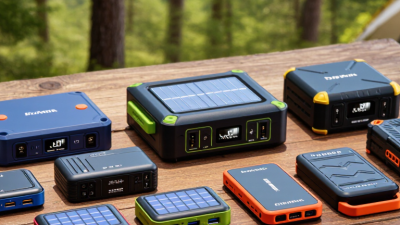
For global buyers, outdoor power banks should match the trip, not just the advertised capacity. A reliable hiking model ranks first with 10,000mAh capacity, low weight, and a tough, textured shell. A camping model follows with 20,000mAh or more, useful for several nights. Emergency use favors a unit with a flashlight, battery indicator, and slow solar charging. Solar charging is helpful, but rarely fast. Photography travelers need USB-C Power Delivery, ideally 65W, for cameras and compact laptops. A family travel model earns its place through multiple ports and stable output.
Cold-weather users need temperature protection and tested performance below freezing. Results vary sharply between products. Wet-coast adventures call for a sealed design with a recognized water-resistance rating, while cyclists benefit from a slim body that fits a frame bag. These are separate priorities. A waterproof case may still feel awkward on a bicycle. For remote work, the strongest option supports higher wattage, pass-through charging, and clear thermal controls. Heat matters.
A tenth choice suits budget-conscious day trips: 5,000mAh to 10,000mAh, fast charging, and simple indicators. I would not rank capacity alone. Real output is lower after conversion losses, cable resistance, and cold exposure. Check USB-C standards, recharge time, weight, and protection features before buying. Manufacturer claims deserve practical testing. A power bank that survives dust but charges slowly may disappoint at sunset. My ranking remains imperfect because climate, devices, and travel habits change the result.
Top 10 Outdoor Power Banks for Global Buyers
Comparison by outdoor use case, nominal energy capacity, and maximum USB-C output. The figures represent typical commercially available specifications and exclude brand names.
Larger capacities provide more phone or laptop charges, while higher output is better for tablets, cameras, and USB-C laptops. Models above approximately 100 Wh may be restricted or prohibited in passenger aircraft baggage, depending on local aviation regulations.
Safety, Compatibility, and International Travel Considerations
For global travelers, the best outdoor power bank is not simply the largest one. Safety comes first. The IATA 2025 Dangerous Goods Regulations classify power banks as spare lithium batteries. Most airlines allow units up to 100 Wh in carry-on baggage, while 101–160 Wh may require airline approval. Larger units are generally prohibited on passenger aircraft. A 20,000 mAh bank at 3.7 volts equals about 74 Wh. Check the printed rating, not only the marketing capacity.
Compatibility also changes across borders. Choose USB-C Power Delivery, with clear output ratings such as 5V, 9V, and 12V. It can support phones, cameras, and some compact laptops. Do not assume every cable delivers the same power. The International Electrotechnical Commission’s IEC 62133-2 standard addresses safety testing for portable lithium batteries, so buyers should look for credible compliance information and physical protection against overheating. A rubberized shell helps outdoors, but it does not make a device waterproof.
Small details matter. Keep the bank in your cabin bag, protect its ports from sand, and avoid charging it inside a hot vehicle. IATA guidance also advises preventing short circuits with protective covers or packaging. I still prefer a lower-capacity model during flights. It feels less impressive, but it is easier to declare and carry. Solar panels can help during hiking, yet their output often drops sharply under clouds or tree cover. The ranking is never perfect. Local airline rules can be stricter. Check them before departure.



 WS Kate
 Weshare Power Bank