Top 5 Charging Cabinet Solutions for Global Buyers?
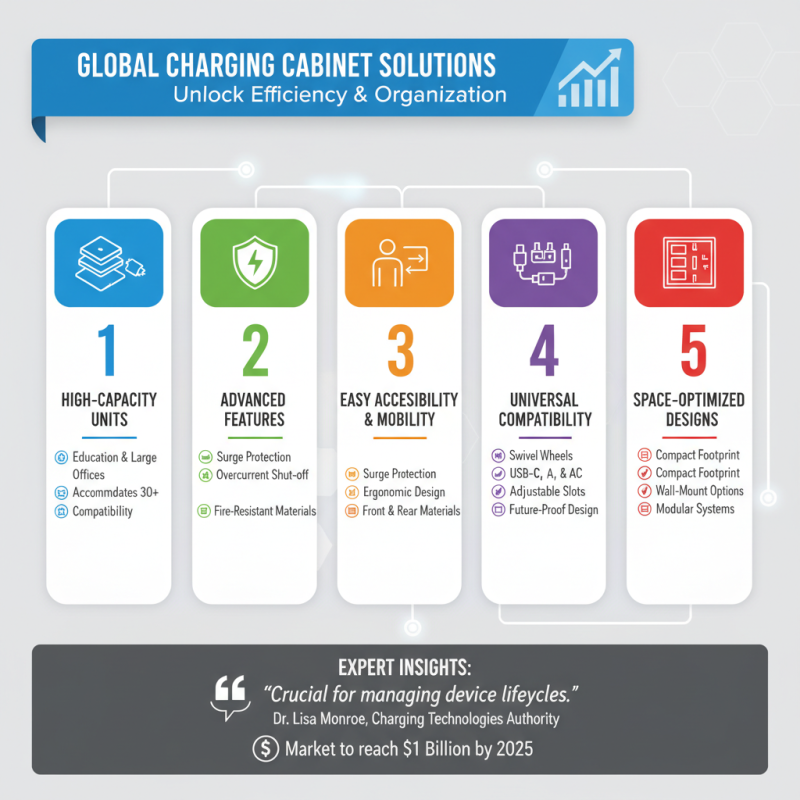
The demand for efficient Charging Cabinet solutions is rapidly growing across various sectors. According to recent market research, the global market for Charging Cabinets is expected to reach $1 billion by 2025. This surge is driven by the need for convenient and organized charging stations in educational institutions, corporate offices, and tech hubs.
Experts in the field emphasize the importance of choosing the right Charging Cabinet. Dr. Lisa Monroe, a leading authority on charging technologies, notes, “Selecting a Charging Cabinet is crucial for managing device lifecycles effectively.” She suggests that organizations should consider capacity, safety features, and accessibility when choosing a solution.
However, not all Charging Cabinets are created equal. Buyers must reflect on what works best for their unique needs. Issues such as compatibility with various devices and the physical space available are often overlooked. A comprehensive understanding of the available options can lead to better investment decisions in this growing market.
Understanding the Importance of Charging Cabinets for Electronics
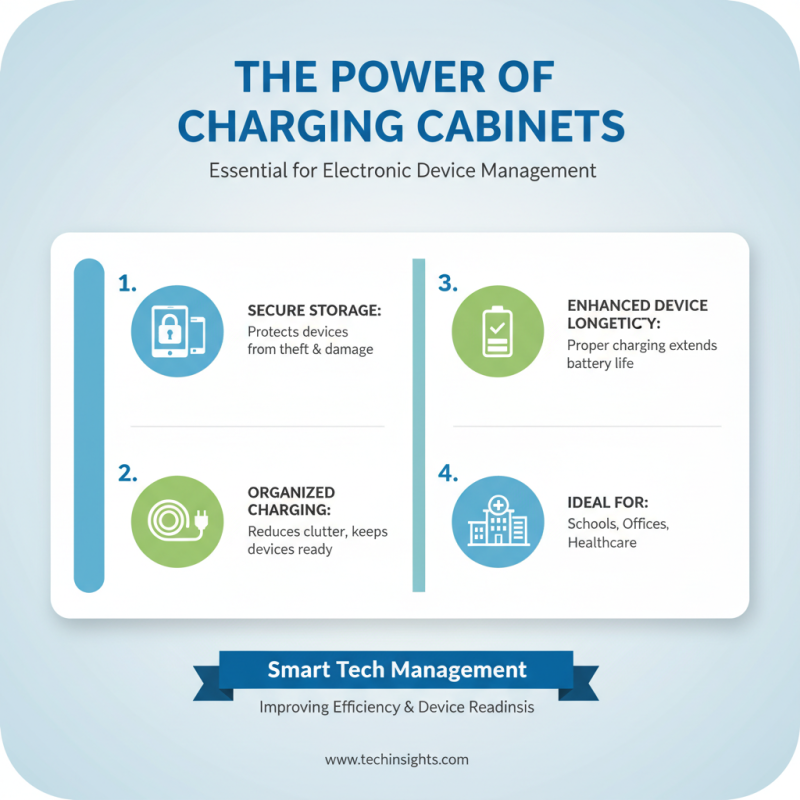
Charging cabinets play a critical role in managing electronic devices in various environments. They offer a safe and organized way to store devices while ensuring they remain charged. This is especially important in schools, offices, and healthcare settings, where multiple devices are frequently used. A well-designed charging cabinet can improve device longevity and reduce clutter.
These cabinets should accommodate various device types and sizes. Adequate ventilation is essential to prevent overheating during charging. Users should look for solutions that offer secure locking mechanisms to prevent theft. An effective charging cabinet not only aids in device management but can also enhance workflow efficiency.
However, choosing the right cabinet is sometimes a challenge. Recognizing the specific needs of users can be difficult. Some cabinets may lack sufficient space for larger devices. Others might not support rapid charging. It's essential to evaluate product specifications and read user experiences for informed decisions. This reflective approach allows buyers to select cabinets that truly meet their requirements.
Key Features to Consider in Charging Cabinet Solutions
When looking for charging cabinet solutions, certain key features are essential for global buyers. First, consider the charging speed. Fast charging cabinets can significantly reduce downtime, improving efficiency in schools and workplaces. Data shows that devices charged with rapid technology can reach full capacity within an hour, optimizing daily operations.
Next, focus on security features. Many institutions prefer cabinets with lockable doors. This protects devices from theft and misuse. According to a survey, 45% of organizations identified theft as their main concern related to charging stations. Enhanced security often means peace of mind for users.
Monitoring capabilities are another crucial aspect. Cabinets equipped with smart technology can track the status of each device. Reports indicate that institutions using smart charging solutions reported a 30% increase in device availability. These insights allow for better management of resources.
Reflecting on user experiences can uncover flaws. Many users struggle with compatibility issues across various devices. This inconsistency can create frustration, underscoring the need for universal solutions. Ultimately, addressing these aspects can lead to better outcomes in charging cabinet implementation.
Top Brands Offering Charging Cabinets for Global Buyers
When searching for charging cabinet solutions, various brands offer unique features. Many manufacturers focus on security and efficiency. Well-designed cabinets help streamline the charging process and keep devices safe. With the rise in tech usage globally, quality cabinets are more crucial than ever.
When choosing a charging cabinet, consider the size and capacity. Some cabinets are compact and portable, which is ideal for smaller spaces. Others hold many devices, suitable for schools or offices. Be mindful of the materials used; durability affects the overall safety.
**Tips:** Check online reviews before making a purchase. Real user experiences can shed light on any flaws. Also, think about your future needs. Will your device collection grow? Planning ahead can save you money and hassle.
Top 5 Charging Cabinet Solutions for Global Buyers
| Model |
Capacity |
Material |
Key Features |
Price Range |
| Model A |
30 Devices |
Metal |
Fast Charging, Lockable Doors |
$600 - $800 |
| Model B |
36 Devices |
Plastic |
Mobile App Control, LED Indicators |
$500 - $700 |
| Model C |
24 Devices |
Aluminum |
Portable Design, Overcharge Protection |
$400 - $600 |
| Model D |
48 Devices |
Stainless Steel |
Heavy Duty Construction, RFID Access |
$800 - $1000 |
| Model E |
12 Devices |
Wood |
Stylish Finish, Quiet Operation |
$300 - $500 |
Comparative Analysis of Charging Cabinet Pricing and Value
When assessing charging cabinets, pricing and value are critical factors for buyers. A comparative analysis reveals significant differences in costs. Basic models can start at a lower price point, but might lack essential features. More advanced units often incorporate smart technology, which raises the price. The question arises: are these additional costs justifiable?
Buyers frequently face a dilemma. Higher-priced cabinets often offer better durability and enhanced security features. Some units provide remote monitoring capabilities, which can save time. However, not every institution requires such advanced functionalities. Understanding specific needs can illuminate the value proposition. An investment in a higher-quality cabinet may pay off in the long run through reduced maintenance costs.
Accessibility and user-friendliness also play crucial roles. A cabinet with intuitive design can reduce training time and improve user experience. Conversely, if a cabinet is difficult to use, its advantages may be overlooked. In this rapidly evolving market, reflecting on these factors is vital. Consider each option's potential drawbacks. Balancing budget constraints with long-term value can lead to more informed decisions.
Future Trends in Charging Cabinet Technology and Design
The landscape of charging cabinet technology is rapidly evolving. With the increasing demand for efficient and organized charging solutions, future designs will focus on smart integration. Smart features can help manage charging cycles and reduce energy consumption. Data analytics will play a key role in optimizing usage patterns.
Next-generation charging cabinets may incorporate advanced materials to enhance durability and heat management. Users increasingly expect cabinets that are not only functional but also aesthetically pleasing. Innovative designs could include modular systems, allowing for customization based on user needs. These trends reflect a shift towards user-centric solutions.
However, challenges remain. Many existing products lack sufficient security features. As reliance on technology grows, protecting sensitive devices becomes crucial. Manufacturers must address these issues while also considering cost-effective solutions. Balancing innovation with practicality will be essential for future developments in charging cabinet technology.
Top 5 Charging Cabinet Solutions for Global Buyers







 WS Kate
 Weshare Power Bank