Contact
Leave Your Message

China Top Shared Power Bank Station Manufacturer?

Choosing a China Top Shared Power Bank Station Manufacturer requires more than comparing factory prices. Buyers should examine product reliability, charging efficiency, software stability, and after-sales support. A station may look modern in a showroom, yet fail beside a busy café entrance after months of daily use.

Cai Wei, founder and CEO of Smart Share Global, has said, “Shared power banks solve a small but frequent problem.” This simple observation explains the industry’s appeal. A reliable Shared Power Bank Station serves commuters, travelers, shoppers, and restaurant guests when battery levels fall unexpectedly. The strongest Chinese manufacturers combine durable housings, smart locking systems, clear rental instructions, and remote monitoring. They also provide practical customization. Branding matters, but uptime matters more.

Look closely at the details. Can the station support different phone connectors? Does the software report missing or damaged units quickly? Are payment systems secure and compatible with the target market? A dependable supplier should explain testing procedures, battery safety controls, certification records, and replacement timelines. Factory visits, sample testing, and pilot deployments offer stronger evidence than polished brochures.

There is no perfect supplier. Not yet. Some manufacturers overstate capacity, while buyers sometimes underestimate maintenance costs. A thoughtful comparison should include real operating conditions, such as dusty counters, crowded terminals, unstable networks, and repeated cable bending. This article examines leading Chinese manufacturers through experience, engineering capability, operational transparency, and long-term customer support. The goal is practical judgment, not empty promotion.

China Top Shared Power Bank Station Manufacturer?

What Is a Shared Power Bank Station?

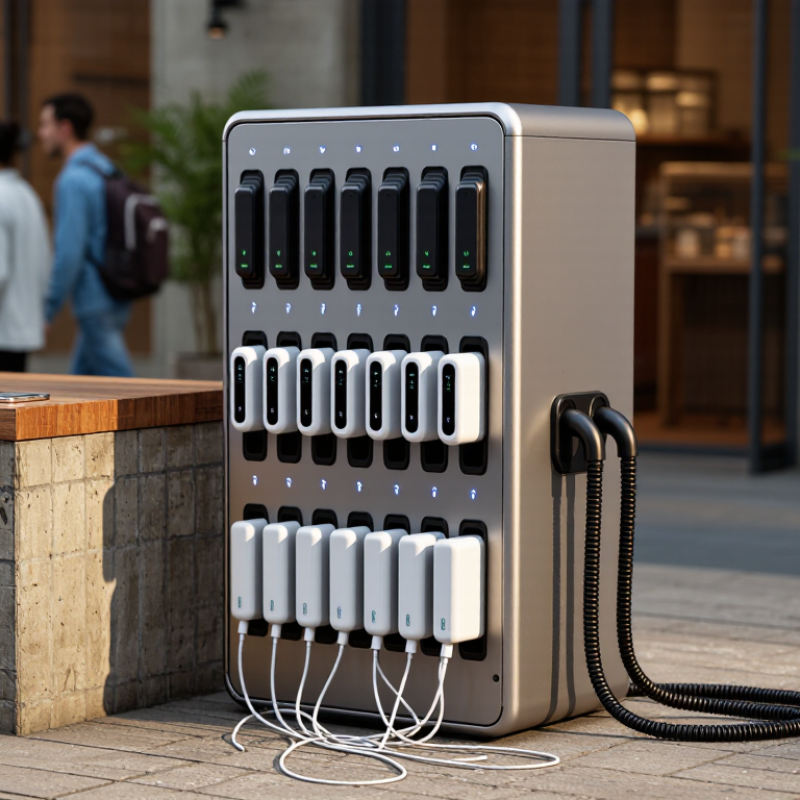
A shared power bank station is a self-service charging network for public spaces. It stores portable batteries inside a secured cabinet. Users scan a code, select a charged unit, and return it later. The station then records lending time, battery status, and return location. This differs from a fixed charging kiosk. Users can keep moving while their phones recharge.

The need is practical. GSMA Intelligence reported about 4.7 billion mobile internet users worldwide in 2023. Many depend on smartphones for payments, navigation, tickets, and communication. Grand View Research valued the global power bank market at approximately USD 13.6 billion in 2023. It also expects continued growth through 2030. These figures support demand for flexible charging access, especially in restaurants, transport hubs, campuses, and event venues.

A reliable station needs more than attractive hardware. It should provide USB-C support, clear charging indicators, battery health monitoring, and protection against overheating. Operators must inspect cables, clean rental units, and remove damaged batteries quickly. Real-world usage is less predictable than a report suggests. Some users forget returns, while others need faster charging than advertised. Network coverage can also fail indoors. Therefore, manufacturers should test stations under crowded conditions, measure actual charging performance, and publish understandable safety information.

What Is a Shared Power Bank Station?

A shared power bank station is a self-service rental device that stores, charges, and releases portable power banks. Users scan a QR code or use a mobile payment method to rent a power bank and return it to any compatible station. The chart shows common dock-capacity configurations used for different installation environments.

The values represent the number of power-bank slots in commonly available shared charging station configurations. Smaller units are suitable for cafés and shops, while larger units are designed for transport hubs, shopping centers, entertainment venues, and other high-traffic locations.

How Shared Power Bank Stations Work in China

China Top Shared Power Bank Station Manufacturer?

How Shared Power Bank Stations Work in China

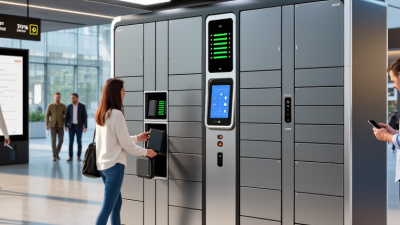
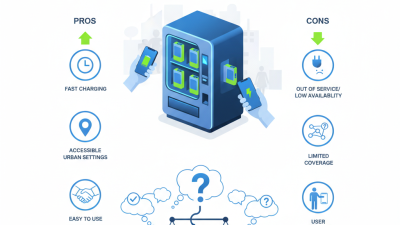
Shared power bank stations provide portable charging in malls, restaurants, transport hubs, and entertainment venues. Users scan a QR code on the station, confirm payment, and release a charged power bank. The device usually includes charging cables for common phone ports. A built-in system records the rental time and calculates the fee. Users return the power bank to any compatible station within the service network. The process feels quick. However, network coverage and station availability can affect the experience.

From an operational view, reliable stations need stable software, accurate battery detection, and regular equipment inspections. Staff should check damaged cables, empty slots, and charging performance. Clear pricing also matters. Hidden fees can reduce user trust and create disputes. In busy Chinese venues, stations are often placed near entrances, dining tables, and cashier areas. These locations match real charging needs. Still, placement alone cannot solve poor maintenance.

Tips: Choose stations with visible pricing and working return slots. Check the cable before connecting your phone. Keep the rental record until the power bank is returned successfully. For operators, test each slot daily and record repeated faults. Small maintenance details often decide whether users return. The model is convenient, but it is not perfect. Oversized phones, weak signals, or unavailable return points can still cause frustration.

China Top Shared Power Bank Station Manufacturer? - How Shared Power Bank Stations Work in China
Category Data Dimension Typical Information in China
Business Model Service Type Short-term rental of portable power banks through unattended or semi-attended charging stations placed in restaurants, shopping centers, hotels, transport hubs, entertainment venues, and convenience locations.
Business Model Revenue Structure Revenue is generally generated from rental fees, overdue charges where applicable, deposits or authorization holds in selected payment flows, and venue-based commercial agreements.
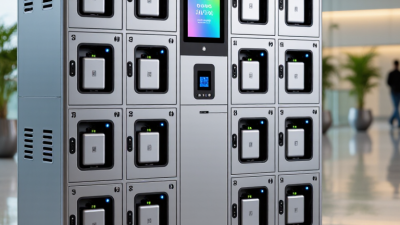
Station Hardware Common Station Capacity Small countertop units commonly hold approximately 6–12 power banks, while larger floor-standing stations may hold around 20–60 or more units depending on venue requirements.
Station Hardware Power Bank Capacity Common rated capacities are approximately 5,000–10,000 mAh. The usable energy delivered to a phone is lower than the printed battery capacity because of conversion and charging losses.
Station Hardware Built-in Charging Cables USB-C Lightning-compatible Micro-USB
Cable combinations vary by model and are intended to cover common smartphones and small consumer electronics.
Station Hardware Output Interface Most rental power banks use integrated cables and standard USB charging protocols. Actual charging speed depends on the power bank, cable, phone, temperature, and charging protocol supported by the device.
Rental Process User Identification Users typically scan a QR code displayed on the station, open a mobile payment or mini-program interface, review the rental terms, and authorize the transaction using a supported digital payment method.
Rental Process Power Bank Release After payment authorization or order confirmation, the station unlocks one available slot and releases a charged power bank. The system records the station, slot, device, and rental start time.
Rental Process Return Method The user usually returns the power bank to any compatible station within the service network rather than only to the original station. The return is completed after the slot detects the device and confirms successful insertion.
Pricing Charging Basis Rental fees are commonly calculated by time, with the exact rate, billing interval, free period, daily cap, and maximum charge displayed in the user interface before confirmation. Prices vary by city, venue, season, and operating policy.
Pricing Overdue or Lost Device Handling If a power bank is not returned within the specified period, the system may continue billing, apply a capped charge, or treat the device as lost according to the published rental terms and applicable consumer-protection requirements.
Connectivity Cloud Management Connected stations can transmit information such as slot availability, charging status, rental orders, fault codes, device location, return events, and inventory levels to a centralized management platform.
Connectivity Communication Methods Depending on the station design and deployment environment, communication may use cellular networks, Wi-Fi, Bluetooth for local setup, or wired communication between internal control components.
Software User Interface Functions Common functions include QR-code rental, fee display, payment authorization, order history, station search, return guidance, customer support, refund handling, and reporting of abnormal devices or charging problems.
Software Operator Dashboard Operators generally monitor station uptime, available inventory, utilization, revenue, return rates, battery health, fault alarms, offline stations, and maintenance tasks through a web or mobile dashboard.
Battery Safety Protection Features Commercial power banks commonly incorporate protection against overcharge, over-discharge, short circuit, over-current, over-voltage, and excessive temperature. Protection performance depends on the product design and quality-control process.
Battery Safety Cell Technology Rechargeable lithium-ion or lithium-polymer cells are widely used because of their energy density and compact size. Battery packs should be designed, tested, labeled, transported, and recycled according to applicable standards and regulations.
Station Operation Charging Cycle After a returned power bank is inserted, the station checks the device, begins charging, and reports its status. Charging time depends on battery capacity, remaining charge, charger output, temperature, and station design.
Station Operation Availability Management The platform can balance inventory by identifying stations with high demand, low availability, excessive returns, or insufficient charged units, allowing field teams to relocate or replenish devices.
Maintenance Routine Service Items Typical maintenance includes cleaning charging contacts, checking cables and connectors, replacing damaged power banks, clearing blocked slots, testing network connectivity, updating firmware, and verifying payment or QR-code functions.
Maintenance Fault Detection Common fault alerts include a station being offline, a slot failing to release or accept a device, abnormal charging temperature, low battery inventory, damaged cable detection, payment errors, and repeated unsuccessful returns.
Deployment High-Demand Locations Locations with frequent waiting, dining, shopping, travel, or entertainment activity are generally suitable because users are more likely to need temporary charging while away from a wall outlet.
Deployment Venue Requirements A suitable venue usually needs visible placement, stable electricity, acceptable mobile connectivity, customer traffic, staff or operator access for maintenance, and agreement on revenue sharing or service responsibilities.
Performance Key Operating Metrics Important metrics include rental orders per station, utilization rate, average rental duration, return completion rate, repeat-user rate, station uptime, device loss rate, charging failure rate, and maintenance response time.
Compliance Consumer Information The rental interface should clearly present pricing, billing rules, return locations, overdue or lost-device policies, customer-service channels, privacy information, and refund or dispute procedures before the user confirms the order.
Compliance Data Protection Platforms handling payment identifiers, account information, location data, and order history should apply access controls, data minimization, secure transmission, retention rules, and other safeguards required by applicable Chinese laws and regulations.
Manufacturer Evaluation Selection Criteria A qualified manufacturer or solution provider should be evaluated by battery safety documentation, product consistency, station reliability, software stability, payment integration, network management, after-sales support, spare-parts availability, customization capability, and compliance support.
Manufacturer Evaluation Typical Supply Scope A complete solution may include station hardware, power banks, embedded cables, charging modules, firmware, cloud software, user interfaces, payment integration, installation guidance, operating tools, maintenance support, and replacement parts.

Key Features of China’s Leading Manufacturers

China’s leading shared power bank station manufacturers combine practical design with disciplined production.

Their stations often support multiple charging ports, fast deployment, and compact footprints for cafés, hotels, airports, and retail spaces. Durable ABS housings, reinforced cables, and heat-resistant components help the equipment survive frequent public use.

Safety is a defining feature.

Experienced manufacturers test battery cells, charging circuits, temperature control, and overcurrent protection before shipment. Many factories also use traceable quality records and controlled assembly lines. Real-time management software can monitor inventory, charging status, fault alerts, and station performance. This helps operators respond before empty docks frustrate users.

Integration matters too.

Leading suppliers usually offer flexible payment connections, multilingual interfaces, and software compatibility for different markets. They may provide sample testing, customized colors, installation guidance, and spare parts support. A reliable manufacturer explains limitations clearly instead of promising perfect uptime. No system is perfect. Outdoor moisture, poor placement, or careless handling can still create failures. Buyers should inspect test reports, warranty terms, replacement procedures, and production experience before choosing a partner. The strongest suppliers remain responsive after delivery, when real operating conditions reveal what factory demonstrations sometimes miss.

How to Evaluate a Shared Power Bank Station Supplier

How to Evaluate a Shared Power Bank Station Supplier

A reliable supplier should understand real usage, not only product specifications. The GSMA Mobile Economy 2024 report estimates that 4.6 billion people used mobile internet in 2023. This creates strong demand for convenient charging in malls, hotels, airports, and restaurants. However, high demand does not excuse weak engineering.

Ask for battery test records, cycle-life results, and shipment inspection reports. Cells should meet UN 38.3 transport testing and IEC 62133-2 safety requirements. Check charging speed, temperature control, connector durability, and overcurrent protection. A station with twelve slots may look efficient, but poor ventilation can reduce battery life. Request evidence from pilot deployments. Photos are not enough.

Software matters as much as hardware. Confirm uptime records, remote fault alerts, inventory tracking, and API compatibility. A useful dashboard should show empty slots, charging failures, and overdue returns. Insist on service-level targets, spare-part availability, and a clear replacement process. Grand View Research’s 2024 power bank market analysis identifies expanding mobile-device use as a key growth driver, but market growth alone cannot prove supplier quality.

Test a small batch in different locations before placing a large order. Observe payment failures, cable wear, refund timing, and user damage. No supplier is perfect. Weaker vendors may still offer attractive prices. That is where careful scoring becomes essential: safety, reliability, software, support, and total operating cost should carry more weight than appearance.

Applications and Future Trends in Shared Charging Services

Shared charging services are moving from convenience kiosks to everyday urban infrastructure. In China, stations appear in restaurants, transit halls, campuses, hospitals, and entertainment venues. A visitor scans a code, removes a charged power bank, and returns it elsewhere. This solves a practical problem: battery anxiety during commuting, shopping, and travel. Operators must manage heat, humidity, tampering, cleaning, and uneven demand. From field observations, placement often matters more than decorative design. A station near a checkout counter may perform better than one hidden beside a lift. Not always.

The strongest applications support short, unplanned charging sessions. Delivery workers, tourists, students, and event visitors need access without carrying extra equipment. Reliable services require battery health checks, electrical protection, clear pricing, and readable return instructions. Manufacturers also need modular hardware, remote diagnostics, and replaceable components. Data helps forecast demand, but it can mislead when festivals, weather, or transport delays change user behavior. Human inspection remains necessary. That part is easy to underestimate.

Future services may connect with smart buildings, transport systems, and digital payment networks. Smaller stations could use occupancy sensors to guide users toward available units. Better batteries may shorten charging time while reducing heat. Solar-assisted stations could serve selected outdoor locations, though weather limits their value. Accessibility will matter more, including reachable screens and simple instructions. Privacy also deserves attention; location data should be collected carefully and retained only when needed. The industry still needs to test whether constant availability can remain profitable in low-traffic areas. That question remains open.