Choosing the right Power Bank Sharing Cabinet is no longer a simple hardware decision. It affects customer convenience, device security, operating costs, and brand trust. Public spaces now expect reliable charging near transport hubs, hotels, shopping centers, campuses, and event venues.
Industry reports show why this category deserves careful evaluation. The GSMA Mobile Economy 2024 report recorded more than 5.5 billion unique mobile subscribers worldwide. That figure reflects a large audience carrying power-dependent devices every day. The Ericsson Mobility Report, released in November 2024, also reported continued growth in mobile data traffic. More connected services mean greater pressure on battery availability. Meanwhile, Grand View Research identifies portable power banks as a growing consumer-electronics segment, although market estimates vary by definition and region. That inconsistency matters.
A cabinet should therefore be judged beyond its appearance. Check charging compatibility, battery capacity, connector quality, rental tracking, screen visibility, and emergency release procedures. Look for clear operating records and documented safety testing. A cabinet placed beside a busy café may need faster turnover than one inside a quiet office lobby. Dust, heat, poor lighting, and unstable network coverage can change performance quickly. Small details matter.
There is no universal “best” model. A low-cost unit may appear efficient, but weak connectors can increase maintenance visits. A premium cabinet may offer better control, yet its return may depend on location traffic. Buyers should compare total ownership cost, not only the purchase price. Independent testing is valuable, but supplier claims still require verification. That is where many buying guides become too confident. Real deployment data should lead the final decision.
How to Choose the Best Power Bank Sharing Cabinet?
Understanding the Main Types of Power Bank Sharing Cabinets
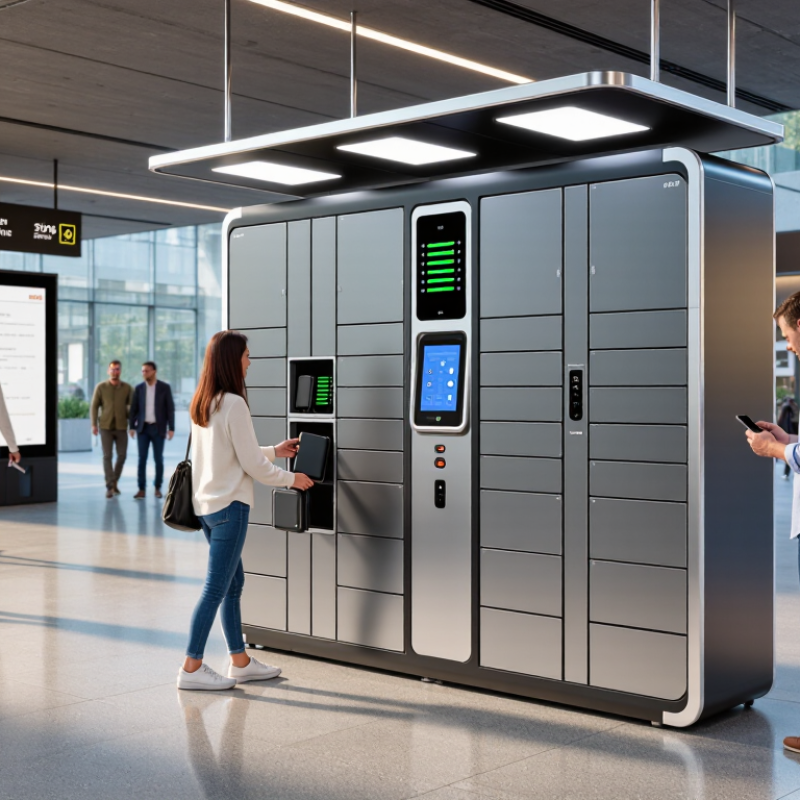
Power bank sharing cabinets usually fall into three practical types: countertop, wall-mounted, and floor-standing units. Countertop cabinets suit cafés, reception desks, and small shops with limited visitor traffic. They occupy little space and allow staff to monitor them easily. Wall-mounted cabinets keep the floor clear and work well near entrances, elevators, or charging zones. Their installation needs a solid surface, nearby power, and careful cable management.
Floor-standing cabinets provide more rental slots and better visibility in busy places. They fit shopping centers, transport hubs, hotels, and event venues. Some models include a touch display, payment access, usage records, and remote status monitoring. These features support daily operations, but they also add maintenance points. A damaged screen or weak network connection can interrupt service.
A modular cabinet offers another useful option. Operators can add slots when demand increases, rather than replacing the entire unit. In practice, check the release mechanism, charging speed, ventilation, and battery inspection process. The cabinet should feel stable when users remove a power bank. It should also show clear instructions and return status. I once underestimated floor space around a busy cabinet. Users need room to queue, turn, and connect their phones. That small planning mistake affected access more than expected. Safety labels, electrical certification, and regular inspection records also deserve attention. A lower price may hide higher service costs.
How to Choose the Best Power Bank Sharing Cabinet?
Battery capacity affects both user satisfaction and operating efficiency. A 5,000 mAh unit may suit short commutes and emergency calls. Larger 10,000 mAh units support tablets, cameras, and extended travel. However, advertised capacity is not fully available after voltage conversion and heat loss. I usually compare usable output, not the printed number. Check the cabinet’s inventory display, too. Empty slots create frustration during busy hours.
Charging speed requires careful measurement. A power bank with USB-C Power Delivery can recharge compatible phones much faster than standard USB output. Yet speed depends on the cable, device, battery temperature, and charging protocol. A cabinet should provide clear port specifications and stable current control. Fast charging sounds attractive. It can also increase heat. During testing, I would check charging performance after several consecutive rentals, rather than trusting a single demonstration.
Device compatibility is often overlooked. Confirm support for USB-C, Lightning, and Micro-USB connections, or provide replaceable cables. Cable length matters when a user holds a phone while walking. I once assumed one connector would cover most customers, but older devices proved that assumption wrong. Compatibility should include tablets, handheld consoles, cameras, and devices with protective cases. A small compatibility test across real customer devices can reveal more than a technical sheet. Overlooking case thickness remains an easy mistake.
Comparing typical shared power-bank profiles by battery capacity, maximum charging speed, and connector coverage.
A balanced 10,000 mAh power bank is suitable for most smartphones and offers a practical compromise between runtime, weight, and charging speed. Higher-output options are better for tablets and handheld consoles, while broader connector coverage improves compatibility across USB-C, Lightning, and Micro-USB devices.
How to Choose the Best Power Bank Sharing Cabinet?
Safety should be verified before appearance. Choose cabinets using power banks tested against UL 2056 and IEC 62133-2 requirements. These standards address abnormal charging, short circuits, overheating, and mechanical abuse. Look for temperature sensors, overcurrent protection, flame-resistant housings, and automatic shutdown controls. A visible charging indicator helps staff spot a failed bay quickly. However, certification alone does not guarantee safe daily operation.
Durability depends on materials and real usage. Select a metal enclosure with protected hinges, reinforced cable connections, and ventilation around charging modules. An IP rating, tested under IEC 60529, indicates resistance to dust and water. An IK rating, based on IEC 62262, indicates impact resistance. These details matter in busy stations where cabinets face spills, luggage contact, and repeated door movement. I would still inspect samples manually. Small plastic cracks can reveal weak engineering.
Maintenance requirements often determine long-term operating cost. The International Energy Agency’s Global E-waste Monitor 2024 reported 62 million tonnes of electronic waste in 2022, with only 22.3% formally collected and recycled. Choose replaceable cables, modular charging boards, diagnostic logs, and accessible filters. Set weekly visual checks and monthly electrical inspections. Record battery swelling, unusual heat, failed locks, and charging delays. Remote alerts are useful, but they can miss physical damage. A practical maintenance plan should include certified battery recycling and scheduled replacement, not only emergency repairs.
| Evaluation Dimension | Entry-Level Cabinet | Standard Commercial Cabinet | Heavy-Duty Cabinet | What to Verify Before Purchase |
|---|---|---|---|---|
| Charging protection | Basic over-voltage, over-current, and short-circuit protection | Independent protection for each charging port, with automatic cut-off | Per-port electronic protection plus cabinet-level surge and temperature monitoring | Request test reports or technical documentation showing protection against over-charge, over-discharge, over-current, short circuit, and overheating |
| Battery safety compatibility | Supports standard lithium-ion power banks | Designed for power banks with battery-management systems and protected cells | Supports documented battery specifications, controlled charging profiles, and condition monitoring | Confirm compatibility with the power bank's chemistry, voltage, capacity, connector type, and charging protocol |
| Temperature management | Passive ventilation | Ventilation openings and temperature-controlled charging interruption | Forced ventilation or fan-assisted airflow, temperature sensors, and alarm capability | Check operating-temperature limits, airflow design, fan noise, filter access, and whether charging stops automatically during overheating |
| Electrical and transport documentation | Supplier declaration and basic electrical specifications | Power-bank documentation commonly references IEC 62133-2 testing and UN 38.3 transport testing | Complete technical file, traceable test reports, and documented service procedures | Verify current regional requirements; IEC 62133-2 and UN 38.3 apply to relevant battery products, not automatically to the cabinet itself |
| Fire-risk controls | Metal or flame-resistant enclosure options | Metal enclosure, separated charging compartments, and smoke or temperature alarm options | Compartmentalized construction, rapid power isolation, alarm reporting, and controlled ventilation | Check enclosure material, compartment spacing, emergency shut-off method, alarm audibility, and local fire-code requirements |
| Physical security | Key lock or simple electronic lock | Electronic access control, door-status detection, and user transaction records | Remote access control, tamper alerts, audit logs, and emergency unlocking procedure | Confirm data retention, administrator permissions, offline operation, emergency access, and protection against forced opening |
| Enclosure durability | Painted steel or impact-resistant polymer panels | Powder-coated steel, reinforced door, replaceable hinges, and protected cable channels | Reinforced steel frame, anti-corrosion finish, vandal-resistant fittings, and serviceable modules | Ask about material thickness, corrosion resistance, hinge cycle testing, impact resistance, and spare-part availability |
| Environmental protection | Indoor, dry-location use | Indoor commercial use with protected ventilation openings | Enhanced sealing and corrosion protection for demanding indoor locations | Do not assume outdoor suitability; verify the tested IP rating, humidity limits, condensation protection, and permitted temperature range |
| Charging connectors and cables | Fixed cables with limited replacement options | Replaceable cables or connector modules for common USB charging standards | Individually replaceable, strain-relieved cable assemblies with port-level monitoring | Check connector compatibility, cable bend protection, replacement cost, maximum charging current, and spare-cable lead time |
| Capacity and scalability | Approximately 4–8 charging or storage bays | Approximately 8–24 bays for regular commercial traffic | 24 or more bays, often with modular expansion | Size the cabinet for peak simultaneous demand, available electrical power, floor space, and future expansion |
| Maintenance frequency | Visual inspection and cable cleaning at least monthly | Weekly visual checks plus monthly connector, lock, and ventilation inspection | Routine inspection logs, scheduled cleaning, firmware review, and preventive service based on usage | Obtain the maintenance manual, recommended inspection intervals, cleaning method, diagnostic process, and service-level response time |
| Replaceable components | Cables and fuses may be replaceable | Cables, locks, charging boards, fans, and power supplies are commonly serviceable | Modular replacement of charging bays, control boards, fans, locks, and power supplies | Confirm part numbers, warranty coverage, technician requirements, and expected availability for at least the planned service life |
| Energy efficiency | Basic power supply with standby consumption | Automatic charging termination and reduced standby power | Load balancing, scheduled charging, power monitoring, and low-power standby modes | Request input-power ratings, standby consumption, charging efficiency data, and overload behavior |
| Best-fit application | Low-traffic offices, small venues, and controlled indoor environments | Retail locations, hotels, campuses, restaurants, and public indoor facilities | Transport hubs, large venues, unattended locations, and high-use commercial deployments | Select based on peak usage, supervision level, environmental conditions, security risk, and available maintenance resources |
A good power bank sharing cabinet should feel simple before it feels clever. I test the user journey from locating a unit to returning it. The screen should show availability, rental duration, pricing, and return instructions clearly. A bright display helps in dim cafés and busy transport areas. Cables must extend smoothly without pulling the cabinet forward. Users also need accessible slots and clear status lights. Small details matter. However, I sometimes overlook sound levels during testing. A quiet motor can improve comfort in libraries, hotels, and offices.
The management system controls daily reliability. Operators should monitor battery levels, cabinet occupancy, faults, and overdue rentals remotely. Useful dashboards reveal which locations need more capacity. Automatic alerts can identify disconnected units or repeated charging failures. Maintenance records should include timestamps and technician notes. This creates accountability and supports consistent service. Still, a dashboard may look impressive while hiding confusing workflows. Real staff should test it during busy periods, not only during demonstrations.
Payment options must be familiar, secure, and transparent. Support for cards, QR payments, and mobile wallets can reduce abandoned rentals. The payment screen should display the final cost before confirmation. Digital receipts, refund tracking, and clear transaction histories build trust. A temporary authorization should be explained in plain language. Test failed payments, weak connections, and interrupted returns. These scenarios are easy to miss. I also recommend checking accessibility, data protection practices, and customer support response times before choosing the cabinet.
Location should shape the cabinet before capacity does. A transit hub needs visible access, strong lighting, and fast turnover. A café may need quieter equipment near seating. The International Energy Agency reported over 4 billion smartphone users worldwide in 2023, creating frequent charging demand in public spaces. However, foot traffic alone is not enough. Measure dwell time, nearby outlets, security coverage, and evening usage for at least two weeks.
Capacity must match real demand, not optimistic forecasts. A 12-slot cabinet may suit a small restaurant, while a 48-slot unit fits a busy station. Leave several empty slots during normal peaks. Full cabinets frustrate users, but oversized cabinets waste floor space and capital. Grand View Research’s 2024 report identifies strong growth in power bank rental services, yet market growth does not guarantee local utilization. That assumption needs testing.
Operating costs include electricity, connectivity, maintenance, payment processing, and replacement batteries. The U.S. Energy Information Administration reported average commercial electricity prices of about 13 cents per kilowatt-hour in 2024, but electricity is rarely the largest expense. Technician visits and damaged cables can cost more. Choose modular parts and track rental frequency, return delays, and failure rates weekly. A small pilot is safer. I would review the numbers after thirty days, because early demand can be misleading.