
Leave Your Message
Outdoor Power Bank demand is moving beyond simple emergency charging. Campers, field technicians, and van travelers now expect higher capacity, solar compatibility, safer batteries, and weather-resistant housings. Grand View Research’s Portable Power Station Market Size, Share & Trends Analysis Report estimates the global market reached approximately USD 545 million in 2023. It also projects strong growth through 2030, driven by outdoor recreation, remote work, and backup-power needs.
China remains a major manufacturing center for this category. Its suppliers commonly integrate lithium battery packs, USB-C outputs, LED lighting, solar controllers, and rugged enclosures within one product. However, factory capability varies widely. A polished product page proves little. Buyers should examine cell traceability, battery management systems, cycle testing, IP ratings, thermal protection, and production consistency. Relevant safety expectations include UN 38.3 transport testing and IEC 62133-2 battery safety requirements.
No ranking is perfect. Supplier data can change quickly. This guide therefore considers manufacturing experience, customization capacity, quality documentation, export history, and after-sales support. It also distinguishes portable power stations from compact Outdoor Power Bank models, since their capacities and use cases differ considerably. MarketsandMarkets identifies rising demand for portable power solutions across camping, emergency backup, and professional outdoor applications. That trend sounds promising, but real performance depends on honest capacity ratings and field testing.
A dependable supplier should explain how its product performs beside a wet campsite, inside a hot vehicle, or during repeated overnight charging. The following China-based companies are assessed through that practical lens, not marketing language alone.
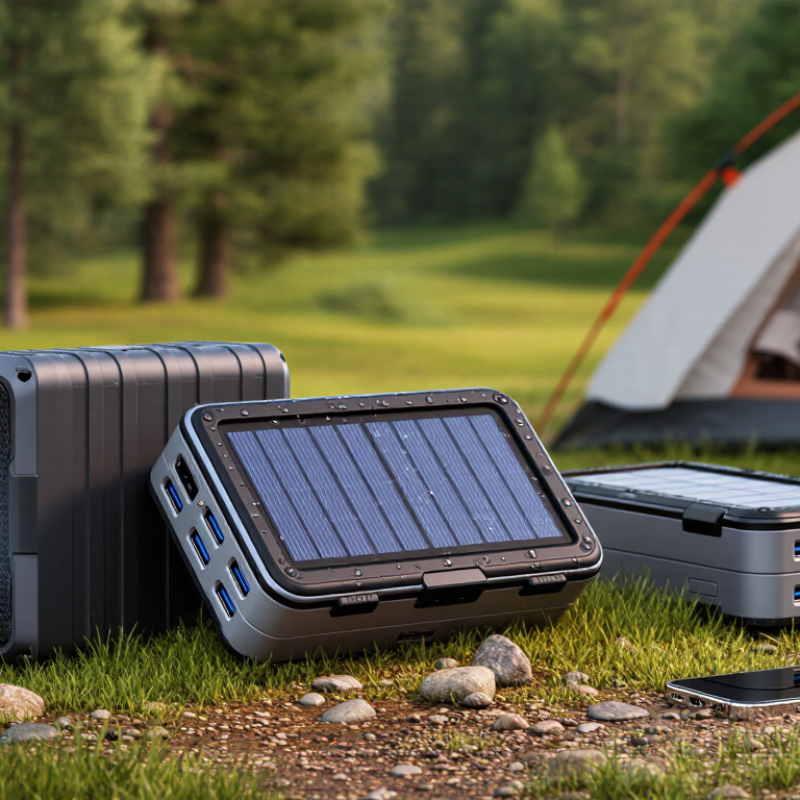
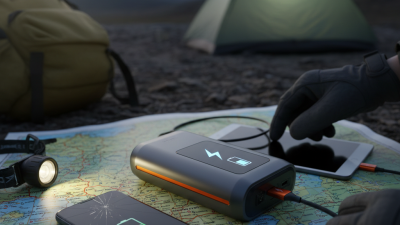
An outdoor power bank stores electricity for phones, cameras, GPS devices, and lamps away from wall outlets. Smaller models usually provide USB output, while larger portable power stations may include AC sockets and DC ports. Their value is simple: reliable energy during camping, hiking, road travel, or unexpected outages.
The Outdoor Industry Association’s 2024 Participation Trends Report recorded 175.8 million U.S. outdoor participants in 2023. More people outdoors means more demand for lightweight charging equipment. Field users often value a tough enclosure, clear battery indicators, USB-C fast charging, and practical water resistance. Capacity matters too. However, a large milliamp-hour figure can mislead because conversion losses reduce usable energy.
Battery technology is also improving. The International Energy Agency reported that average lithium-ion battery pack prices fell to 139 dollars per kilowatt-hour in 2023. Lower cell costs support higher capacities, but retail prices also reflect safety circuits, casing, ports, and testing. Solar charging sounds attractive. It is not magic. Cloud cover, panel angle, and shade can make charging painfully slow. I would check watt-hours, output limits, weight, and thermal protection before choosing a supplier. A 20,000mAh unit may suit a weekend phone, while a multi-hundred-watt-hour station better supports lights and small appliances. The honest weakness is portability: more stored energy usually means more weight.
Outdoor power banks are portable battery systems designed to provide mobile electricity away from a wall outlet. The table below summarizes practical product specifications, use cases, and supplier-evaluation factors without listing company or brand names.
| No. | Product Dimension | Typical Specification or Range | Why It Matters Outdoors | Recommended Verification Point for Buyers |
|---|---|---|---|---|
| 1 | Battery Capacity | 5,000–50,000 mAh for handheld models; larger power stations are usually rated in watt-hours (Wh). | Higher capacity can support more phone, camera, GPS, or lighting recharges, but it also increases size and weight. | Check rated energy, usable energy, test conditions, and whether the capacity is stated at cell voltage or output voltage. |
| 2 | Output Power | Common USB outputs range from 10 W to 100 W; AC-equipped portable power stations may provide several hundred watts or more. | Output power determines whether the unit can charge a phone, tablet, laptop, drone battery, or small appliance. | Confirm continuous output, peak or surge output, and the maximum output when multiple ports are used simultaneously. |
| 3 | Charging Ports | USB-A, USB-C, and sometimes DC or AC outlets; USB-C Power Delivery is widely used for higher-power charging. | Different ports allow users to charge phones, laptops, cameras, lights, and other equipment from one unit. | Review the port protocol, voltage profiles, total shared output, and cable requirements. |
| 4 | Recharge Methods | Wall charging, USB-C input, vehicle charging, and optional solar charging are commonly available. | Multiple input options are useful during camping, road travel, emergencies, and off-grid work. | Ask for input power, estimated recharge time, solar-controller type, and whether the solar panel is included. |
| 5 | Ingress Protection | Some rugged models use an IP rating such as IP54 or IP67; ordinary power banks may have no formal IP rating. | Dust and water resistance can improve reliability in rain, sand, workshops, and outdoor travel. | Verify the actual test standard and remember that an IP rating does not automatically mean the product is waterproof in every situation. |
| 6 | Battery Chemistry | Lithium-ion and lithium iron phosphate (LiFePO4) are common rechargeable battery chemistries. | Chemistry affects weight, cycle life, thermal behavior, usable capacity, and product service life. | Request cell specifications, cycle-life test conditions, battery-management details, and end-of-life handling guidance. |
| 7 | Safety Protection | Protection may include overcharge, over-discharge, short-circuit, over-current, over-temperature, and over-voltage control. | Outdoor equipment may face vibration, temperature changes, and irregular charging conditions. | Check the battery-management system, thermal design, fuse arrangement, inspection reports, and relevant transport documentation. |
| 8 | Operating Temperature | Many lithium battery products specify charging near 0–45°C and discharging within a wider range, often around -20–60°C. | Cold or hot conditions can reduce performance, charging speed, and available capacity. | Use the exact product datasheet because temperature limits vary by cell, battery-management system, and enclosure design. |
| 9 | Portability | Small handheld units may weigh about 0.1–1 kg, while larger power stations can weigh several kilograms or more. | Weight, handles, mounting points, and enclosure shape affect transport and field usability. | Compare energy-to-weight ratio, dimensions, handle strength, drop-test results, and packing efficiency. |
| 10 | Compliance and Supply Capability | Common documentation may include UN 38.3 transport testing, IEC-related test reports, and market-specific conformity documentation. | Verified documentation supports safer transportation, customs clearance, and regulatory compliance. | Evaluate sample consistency, quality-control records, warranty terms, minimum order quantity, lead time, and after-sales support. |


 WS Kate
 Weshare Power Bank